
Electric water heaters · 24/7 plumbing emergencies
Water Heater Installation, Replacement and Repair
Leaking tank, no hot water or an aging unit nearing the end of its service life? Have the problem assessed, choose the right solution and restore your hot-water supply with an electric water heater suited to the building.
- 24/7 plumbing emergencies
- RBQ 5688-9025-01
- CMMTQ verifiable member
Active leakA growing puddle calls for a quick response.
No hot waterA proper diagnosis separates plumbing issues from electrical ones.
Planned replacementCapacity, access and the existing installation are checked before the appointment.
The symptom determines the priority
Repair, replace or request emergency service?
A water heater that produces too little hot water does not carry the same risk as a tank emptying onto the floor. The unit’s age, the source of the problem, the condition of the tank and whether the water can be isolated all guide the decision.
The tank or one of its connections is leaking
A puddle at the base of the water heater, a spray or a fitting that will not stop leaking can quickly damage nearby floors and rooms. Shut off the water if the valve is accessible and can be operated safely.
Priority: limit the damage and locate the source.The tank is dry, but the water no longer heats
The cause may involve the building’s power supply, a component inside the unit or another electrical issue. Diagnosis determines whether water heater repair is appropriate or whether an electrician should be involved.
Priority: confirm the cause before replacing the tank.Replacement becomes the prudent decision
A perforated tank cannot be repaired like an accessible fitting. The manufacturing date, corrosion, service history and your insurer’s requirements should be considered before extending the unit’s service life.
Priority: replace it before a leak whenever possible.Complete service with a clear scope
What a water heater plumber can handle.
This service focuses on electric storage water heaters—also called hot water tanks—and their plumbing connections. The exact scope is confirmed according to the unit, access and the existing installation.
Water heater installation
Placement of a new electric unit, adaptation of accessible water connections, and verification of the relief valve, discharge piping and applicable clearances.
Water heater replacement
Draining, plumbing disconnection, removal of the old tank when included in the assignment, positioning of the new water heater and commissioning after the tank is filled.
Fitting and valve repair
A leak may come from a fitting, valve, pipe, relief valve or another accessible component rather than the tank itself. The repair targets the part that is actually failing.
Diagnosis of insufficient hot water
We determine whether the problem affects the entire building, a single fixture or the water heater. When the cause involves the electrical supply or an electrical component, the appropriate trade must be coordinated.
Capacity selection and access review
The number of occupants is not the only factor. Peak demand, bathrooms, household habits, available space, doorways, stairs and the existing installation all influence the choice of a hot water tank.
Homes, condos and multi-unit buildings
Water shutoff, the moving route, floor protection and coordination with the owner, condo association or property manager are adapted to the building.
A planned replacement—not an improvised one
From the old tank to a checked installation.
A successful water heater installation depends as much on preparation as it does on the new unit. Photos, dimensions, capacity, access and existing connections help prevent surprises on service day.
The plumber handles the tank and the plumbing connections included in the assignment. Any electrical modification or intervention that requires it must be completed by someone holding the appropriate qualification.
- 01
Confirm the unit and access
Current capacity, age, model, diameter, height, location, stairs, doors and parking are reviewed before dispatch.
- 02
Isolate, drain and protect
The water and unit are taken out of service as the situation requires. The work area and moving route are prepared before the tank is moved.
- 03
Remove the old water heater
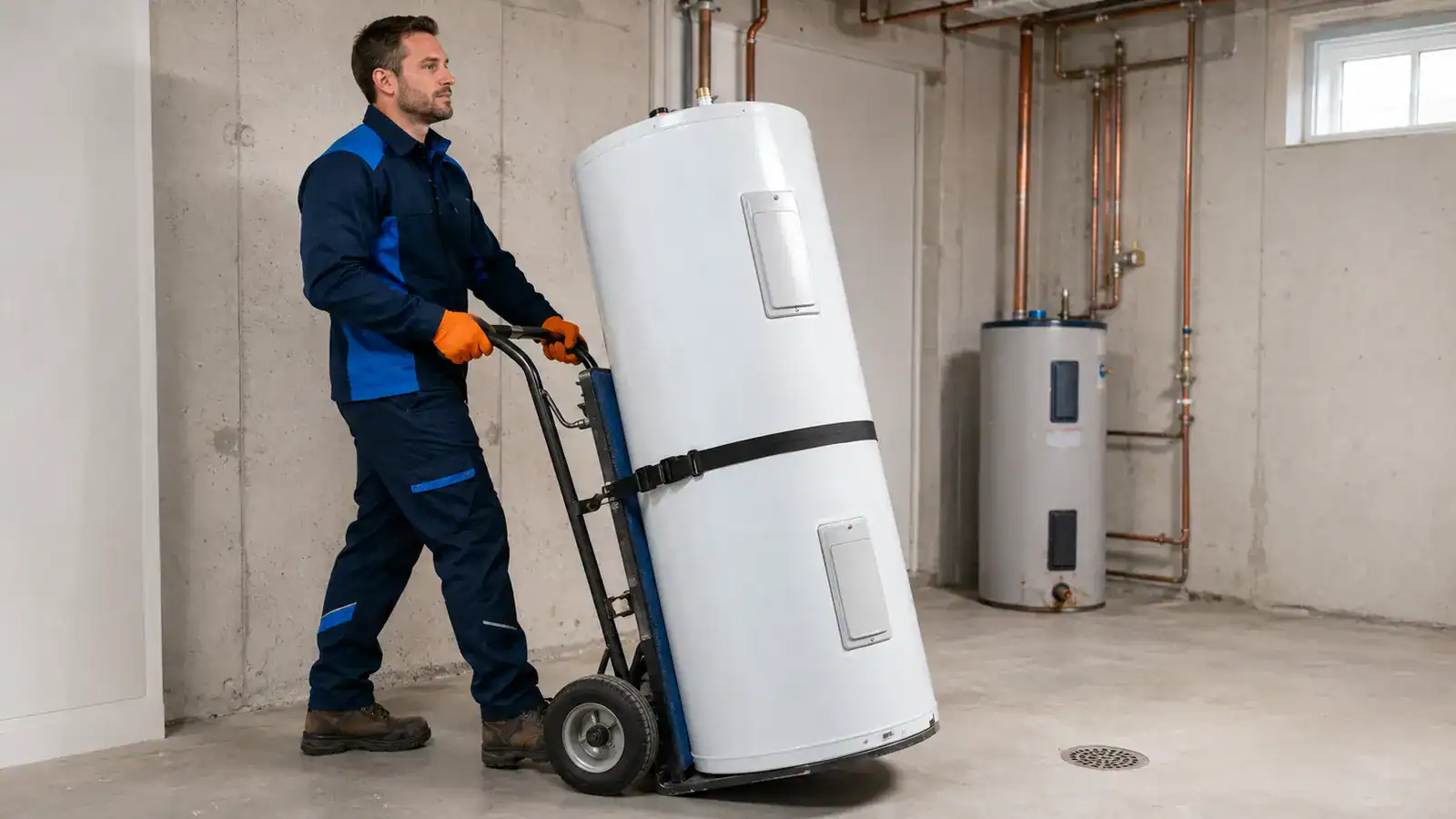
The tank is disconnected and moved with its weight, residual water and the available space taken into account.
- 04
Install and connect the new unit
The new water heater is positioned, then its connections, relief valve and discharge piping are completed according to the applicable configuration and manufacturer’s instructions.
- 05
Fill, purge and check
The tank is completely filled before power is restored. Connections are checked and useful startup information is provided.
The right expense at the right time
When should a water heater be repaired or replaced?
The decision should not rest only on whether the unit still produces some hot water. The source of the leak, condition of the tank, age and relative cost of the work all matter.
The problem comes from an accessible component
Water heater repair may make sense when the tank is sound and the leak comes from a fitting, pipe, valve or another replaceable component included in the plumbing work.
- Damp upper fitting or seeping valve
- Damaged accessible pipe
- Confirmed source without advanced tank corrosion
The tank leaks or the risk becomes disproportionate
A perforated tank, substantial corrosion, recurring problems or an age that no longer meets an insurer’s conditions can make water heater replacement the more reasonable choice.
- Water escaping through the tank body or base
- Visible rust, discoloured water or marked deterioration
- An aging unit with an uncertain service history
Residential and commercial service
Water heater service in Laval, the North Shore and Montreal.
Service is available in covered areas of Laval, key North Shore cities and several Montreal boroughs. The address, type of call and availability are confirmed before dispatch.
In Laval, access ranges from house basements in Chomedey, Sainte-Rose, Vimont and Fabreville to mechanical rooms in condo buildings. On the North Shore and in Montreal, duplexes, triplexes and multi-unit properties often require planning for the water shutoff, occupants and the route used to remove and bring in the tanks.
View all service areas →Relief valve, discharge piping, drain and pan.
The RBQ states that replacing a storage water heater must comply with section 2.6.1.7 of Chapter III, Plumbing, of the Construction Code. Its technical directive addresses relief-valve discharge and applicable arrangements involving a floor drain, retention pit or drain pan.
Read the RBQ technical directive (French) ↗A decision that goes beyond the tank price.
The Gouvernement du Québec notes that hot water represents about 16% of a home’s energy bill. Infoinsurance recommends monitoring the condition and age of the unit and says replacement every 10 to 15 years may be required by an insurer. Always check your own policy.
Gouvernement du Québec hot-water guidance ↗Infoinsurance prevention guidance ↗
Before requesting installation
Five details that make the estimate more accurate.
A few photos and measurements help distinguish a standard replacement from work requiring a different tank size, plumbing changes or special handling.
Rating plate and age
A readable photo showing the current water heater’s model, serial number and capacity.
Full view
A photo of the tank, upper connections, relief valve and surrounding floor.
Dimensions and access
Available height, doorway widths, stairs, tight turns and the distance the tank must be moved.
Hot-water demand
Number of occupants, bathrooms and simultaneous uses during peak periods.
Current symptom
Leak, noise, lukewarm water, no hot water at all or a preventive replacement.
Verifiable trust
Put your water heater in the hands of an identifiable business.
Read reviews published on Google. The rating and review count update automatically in the modules below.
Frequently asked questions
Prepare for water heater service.
For an active leak, tell us immediately whether the valve closes, whether the puddle is growing and whether water is approaching an electrical installation.
24/7 PLUMBING EMERGENCY450-241-0488What should I do if my water heater is leaking?
Close the water heater’s supply valve if it is accessible and operates without force. If the leak continues or you cannot isolate the unit, close the main water supply when it is safe to do so. Keep away from water near electricity and call for emergency water heater service.
Can a leaking water heater be repaired?
Yes, when the leak comes from a fitting, valve, pipe or another accessible component and the tank remains sound. If water is coming through the body or base of a perforated tank, repair is generally not the right solution and water heater replacement should be assessed.
Why do I have no hot water?
No hot water can result from the electrical supply, a component inside the unit, a setting, demand exceeding the tank’s capacity or a problem elsewhere in the system. The context helps direct the diagnosis to the appropriate plumber or electrician.
What water heater capacity should I choose?
Capacity depends on the number of occupants and bathrooms, simultaneous use, household habits and the desired recovery time. Space and access matter as well. These details should be confirmed instead of automatically recommending the same capacity for every property.
How often should a water heater be replaced?
There is no single age that applies to every unit or insurance policy. Infoinsurance gives an average of 10 to 15 years and notes that an insurer may impose its own requirement. Check the manufacturing date, the tank’s actual condition and the terms of your policy.
How much does water heater installation or repair cost?
Cost depends on capacity, the unit, access, handling, the condition of the connections, relief-valve drainage, required adaptations and whether the call is urgent. Photos of the current installation help define the work more accurately.
Do you remove the old water heater?
Removal and disposal of the old tank must be confirmed as part of the assignment before the appointment. Mention stairs, narrow doors, the absence of an elevator or any other obstacle so handling can be planned.
Do you install gas water heaters?
No. The service described on this page is for electric water heaters. We do not offer work on gas appliances or gas supplies.
Do you serve Laval, the North Shore and Montreal?
Yes, within the covered service areas. The address, building type, model, capacity, symptom, access and availability are confirmed before dispatch.