
Backwater valves · Sewer backup protection
Backwater valve installation and replacement
Protect basement plumbing fixtures from wastewater flowing back through the drainage system. We assess the layout, location and access before installing, replacing or inspecting the backwater valve suited to the branch that needs protection.
- 24/7 plumbing emergency response
- RBQ 5688-9025-01
- CMMTQ verifiable member
Active sewer backupWater is rising through a basement drain, toilet or shower.
Protection to verifyA finished basement has fixtures below street level.
Inaccessible valveThe access cover is hidden, blocked or long overdue for inspection.
Diagnose the source before choosing the work
Sewer backup, clogged drain or water infiltration?
Water in a basement does not always have the same source. A backwater valve blocks reverse flow through a drainage branch; it does not clear an obstruction and cannot stop water entering through the soil, foundation or a low opening.
A basement fixture is backing up
Water is coming up through a floor drain, toilet, shower, sink or another low fixture. Stop using connected plumbing fixtures, keep away from contaminated water and request emergency service.
Priority: limit wastewater discharge and identify the backup path.An obstruction may be causing the symptoms
A slow drain, several gurgling fixtures or recurring clogs may point to a blocked or damaged line. The cause should be located before assuming that a new sewer backup valve is the solution.
Priority: diagnose the drain before altering the plumbing.The water may be entering from outside
An overflowing sump, failed pump, foundation crack, low window or surface runoff requires another form of protection. A drainage backwater valve does not replace a sump pump or correct an infiltration problem.
Priority: distinguish sewage from infiltration water.Protection matched to the actual drainage system
What our backwater valve service covers.
The valve type, number and location depend on the fixtures being protected, their elevation, the drainage layout, municipal requirements and pipe accessibility. A proper solution cannot be selected from the visible pipe diameter alone.
Existing protection assessment
Identification of below-grade fixtures, accessible covers and valves already in place to determine what is—and is not—currently protected.
Backwater valve installation
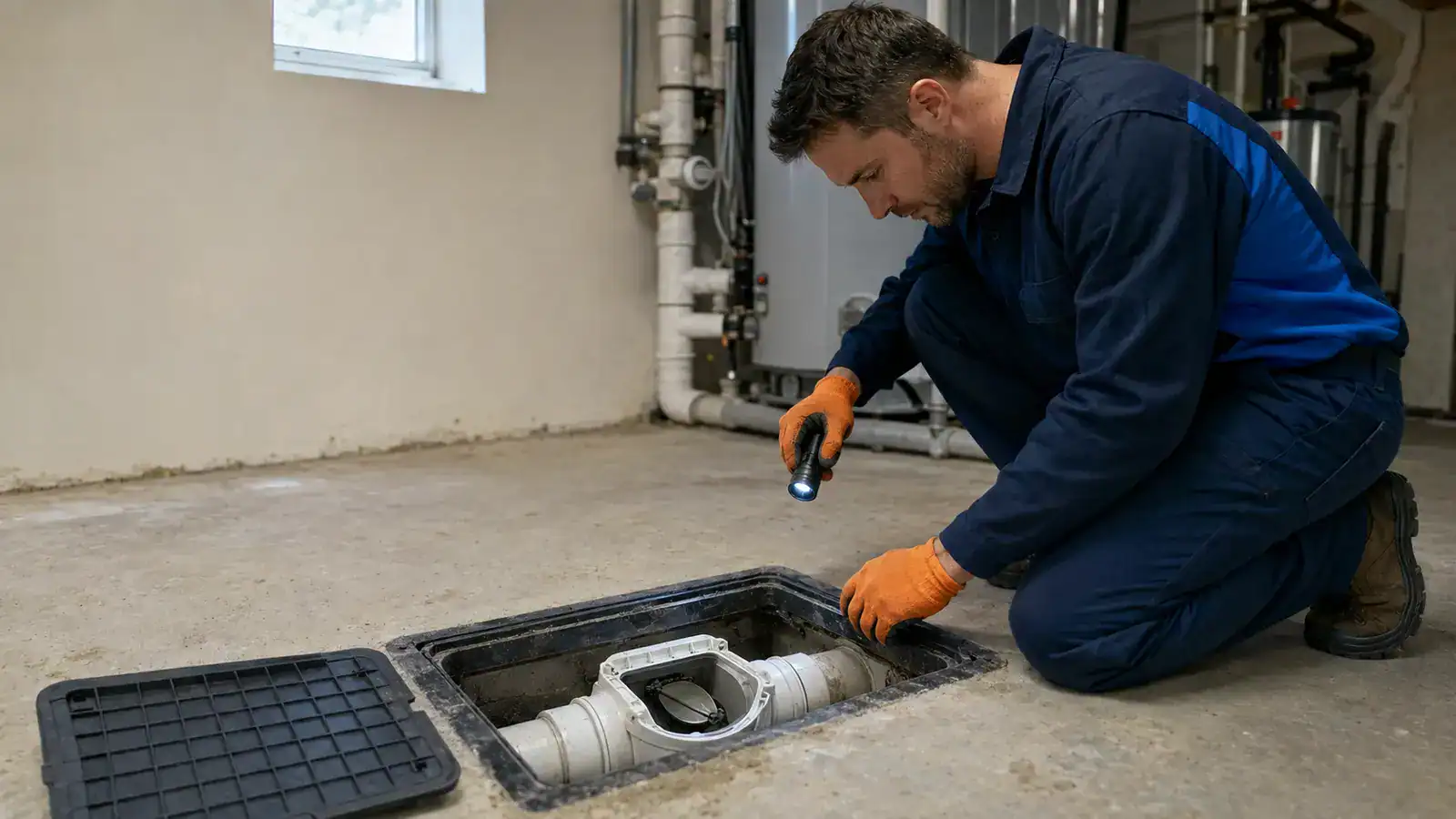
Installation of an authorized valve on the appropriate drainage branch, in the correct flow direction, with permanent access for inspection and maintenance.
Backwater valve repair or replacement
Assessment of a broken, worn, deformed or unsuitable mechanism to determine whether a serviceable component or the full valve must be replaced.
Backwater valve inspection and maintenance
Opening the access cover, removing accessible deposits and checking the flap, seal, closure and freedom of movement.
Creating or restoring access
A valve buried beneath a finished floor cannot be monitored properly. Depending on the layout, the work may require opening the slab and planning a durable access panel.
Diagnosis after a sewer backup
The affected fixtures, flow direction and drain condition are reviewed. A camera inspection may be recommended when it can clarify the pipe route or reveal another problem.
Install it on the right branch—and keep it accessible
From the basement layout to a valve that can be inspected.
A reliable installation begins with the fixtures that need protection and the route of their drain lines. The valve must move freely, allow normal discharge and remain reachable after the flooring is finished.
Laval’s municipal diagram requires protection on the applicable branches and prohibits installing a valve on the main collector. The drainage layout must therefore be confirmed before cutting a pipe or opening the slab.
- 01
Identify the fixtures to protect
Basement toilets, showers, sinks, laundry fixtures, floor drains and catch basins are reviewed with their elevation and connections.
- 02
Locate drain lines and access points
Existing covers, probable pipe routes, slope and visible condition are assessed. A camera may supplement the investigation when useful.
- 03
Select the valve and location
The backwater valve type, protected branch and maintenance clearance are confirmed for the building layout and applicable requirements.
- 04
Install, replace or correct
The pipe is made accessible, the device is installed in the intended flow direction and the connections are completed within the agreed scope.
- 05
Verify operation and explain maintenance
Flap movement and drainage are checked. The owner is shown the access point, warning signs and recommended inspection routine.
Two decisions that determine whether it can work
The correct branch and permanent access.
A hidden valve or a device installed on the wrong pipe can create a false sense of security. The protection must cover the fixtures at risk without interfering with drainage from the rest of the building.
The right fixtures are protected and the valve remains accessible
The device is installed on the branch identified through assessment, in the intended direction, with an access cover that can be opened without demolishing the floor.
- Basement fixtures and drainage routes identified
- Flap accessible for inspection and cleaning
- Drainage checked after the installation
One poorly placed valve buried beneath the finished floor
Installing a device without understanding the network, leaving fixtures unprotected or blocking the access prevents maintenance and may lead to improper operation.
- Installation on the main collector despite Laval’s prohibition
- Access concealed below flooring or fixed cabinetry
- A mechanism obstructed by deposits and never inspected
Residential and commercial plumbing service
Backwater valves in Laval, the North Shore and Montreal.
Service is available throughout covered sectors of Laval, the main North Shore communities and several Montreal boroughs. The address, building type, backup history, basement access and current availability are confirmed before travel.
Finished basements in Chomedey, Sainte-Rose, Vimont and Fabreville may have a bathroom, laundry fixtures, floor drain and catch basin connected to different branches. Montreal duplexes, triplexes and older buildings often require careful separation of basement plumbing from upper-floor drainage. On the North Shore, municipal requirements are checked according to the city and project.
View all service areas →Protect the required branches without blocking the main collector.
Laval’s municipal diagram states that branches receiving wastewater or infiltration water from fixtures below the street crown must be protected, that no valve may be installed on the main collector and that valves and cleanouts must remain accessible and be maintained.
View Laval’s official diagram (French PDF) ↗The right protection depends on the building and municipality.
Quebec’s RBQ connects sewer-backup protection to Article 2.4.6.4 of Chapter III, Plumbing. The City of Montreal also recommends easy valve access and inspection ideally twice a year. Current rules, permits and assistance programs should be verified before work begins.
Read the RBQ backwater-valve directive (French) ↗Read the City of Montreal prevention guide ↗
Before requesting an installation
Five details that make the assessment more precise.
Photos and a clear history help identify the appropriate branch, anticipate access requirements and distinguish preventive installation from diagnosis after a sewer backup.
Basement fixtures
List the toilet, shower, sink, laundry, floor drain and catch basin located below street level.
Photos of access points
Include visible covers, cleanouts, the slab, finished flooring and clearance around the pipes.
History of the problem
Note the last backup, affected fixtures, rainfall or thaw conditions and any earlier plumbing work.
Building documents
Plans, inspection reports, earlier invoices or the suspected location of a valve covered by flooring.
Access and finishes
Describe the floor covering, fixed furniture, walls, stairs, parking and any condominium or building constraints.
Verifiable trust
Sewer-backup protection from an identifiable business.
Read reviews published on Google. The rating and review count update automatically in the modules below.
Frequently asked questions
What to know before opening the slab.
During an active sewer backup, stop using water, keep people and pets away from contaminated areas and tell us which fixtures are overflowing.
24/7 PLUMBING EMERGENCY450-241-0488What does a backwater valve do?
A backwater valve—sometimes called a sewer backup valve or sewer check valve—normally lets wastewater leave the building. When flow reverses, its flap closes to protect the fixtures connected to that branch. The mechanism must remain clean, mobile and accessible.
Is a backwater valve required in Laval?
Laval’s municipal diagram addresses drainage branches receiving wastewater or infiltration water from fixtures below the crown of the street. The exact application depends on the building’s plumbing and current regulations, so the configuration must be assessed before work begins.
Can a backwater valve be installed on the main sewer drain?
Not as a blanket solution. Laval’s official diagram prohibits a valve on the main collector and states that drainage from upper floors must not pass through a valve intended to protect the basement. The individual branches requiring protection must be identified correctly.
How often should a backwater valve be inspected and maintained?
The device must stay accessible and in working order. The City of Montreal recommends checking valves ideally twice a year to ensure they operate and are not obstructed. The model, usage and manufacturer’s instructions may also affect the maintenance schedule.
Does a backwater valve prevent every type of basement flooding?
No. It protects against reverse flow through the specific drainage branch. It cannot stop water entering through a crack, window, foundation or surface runoff, and it does not replace a sump pump when water accumulates in a catch basin.
Is a backwater valve the same as a potable-water backflow preventer?
No. A sewer backwater valve protects the drainage system from reverse wastewater flow. A backflow prevention device protects the potable-water supply from contamination. They address different risks and are selected, installed and inspected under different requirements.
Is a drain camera inspection required before installation?
Not in every case. Camera inspection becomes useful when the pipe route or condition is uncertain, after recurring clogs, when existing access points do not reveal the layout or when an anomaly must be located before opening the slab.
What should I do after a sewer backup?
Stop using connected plumbing fixtures, avoid contact with contaminated water, document the damage and contact your insurer promptly. The drainage system should then be assessed before choosing drain cleaning, repair, valve installation or another preventive measure.
How much does backwater valve installation cost?
Cost depends on the number of branches, valve type, access, flooring, pipe depth, concrete work, drain condition and the restoration included in the scope. Photos and an assessment help define the work without advertising a misleading one-price-fits-all figure.
Are grants available for backwater valve installation?
Some municipalities may offer assistance for sewer-backup protection, including programs in Montreal, but eligibility, amounts and application periods can change. Verify the current program with your municipality before authorizing work and retain all required documents.
Do you install backwater valves in Laval, the North Shore and Montreal?
Yes, throughout covered service areas. The address, building type, fixtures to protect, history of the problem, access to the drain lines and availability are confirmed before travel.