
PLUMBING KNOWLEDGE CENTRE · GREATER MONTREAL
Plumbing Tips
Understand the warning signs, take the safe first step and know when a plumbing problem needs professional attention. This centre brings together practical guidance for homes, rental properties and commercial buildings.
- Practical guidance
- Recognized sources
- Clear safety limits
Useful before it is promotional
Advice that helps you make the next decision
A plumbing guide should do more than repeat a service description. It should help you understand what the symptom may mean, what information to collect and where a do-it-yourself check should stop.
A direct answer
Each guide begins with the observable signs and the safest useful first step.
A clear boundary
We distinguish simple observations from work that requires tools, access or a licensed contractor.
Quebec context
Code, public-health or municipal information is linked to an official source when it matters.
Start with the symptom
Choose the situation closest to what you see
You do not need to diagnose the plumbing system yourself. Begin with what is happening now; the appropriate service can be determined from there.
Water supply
Water is visible or continues to flow
If an accessible shutoff can be used safely, stop the water and protect the surrounding area. Keep away from wet electrical equipment. An active or spreading leak should be reported promptly.
Drainage
A fixture drains slowly, gurgles or backs up
One affected fixture often points to a local branch. Several fixtures reacting together, sewage odours or wastewater at the lowest drain can indicate a problem farther along the system.
Basement protection
Water appears near the floor drain or sump
Stop using plumbing fixtures if wastewater is backing up and avoid contact with contaminated water. Backwater valves and sump pumps have different roles, so the source of the water matters.
Hot water
Hot water changes or disappears
Note whether the change affects every fixture, when it began and whether the electric water heater shows visible leakage. Do not remove panels or touch wet electrical components.
BROWSE BY TOPIC
Plumbing guides organized around real needs
Each topic connects practical articles with the relevant service pages, making it easier to move from research to the right next step.
Drains and Sewers
A slow, gurgling, foul-smelling or backing-up drain does not always reveal where the problem begins. This category brings together practical guides to…
Explore this topicLeaks and Water Supply
Water around a fixture, damp materials, pressure changes or an unexplained increase in water use can point to different plumbing problems. This…
Explore this topicWater Heaters
No hot water, changing temperatures, unusual noises or moisture around an electric water heater can indicate different problems and levels of urgency.…
Explore this topicBasement Protection
Water near a floor drain, dampness around a sump pit, a sewage backup or a pump that operates unusually can point to…
Explore this topicPlumbing Fixtures and Renovations
A running toilet, loose faucet, slow-filling tank, low-flow shower or worn seal does not always mean that the entire fixture must be…
Explore this topicCommercial Plumbing
Recurring blockages, changing water pressure, leaking fixtures, unusual water consumption or unexpected shutdowns can disrupt a business and affect customers, tenants and…
Explore this topicDrains et égouts
Explore this topicArticle library
Latest Plumbing Advice
Useful answers for maintenance, prevention and common plumbing problems.
32 published guides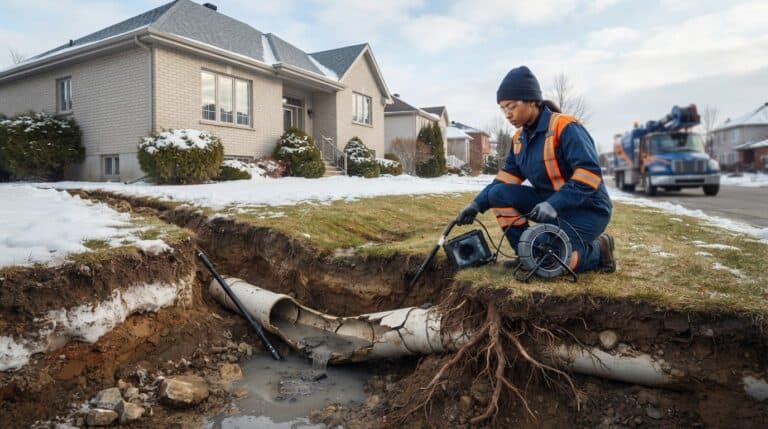
Sagging Sewer Line: 7 Warning Signs to Check
A sewer line that retains water has not necessarily collapsed. It may have developed a low spot, commonly called a belly, where water and…
Read the article
Water Service Line: Leak or Simply Low Pressure?
Low pressure throughout the house, a continuous running-water sound or wet ground between the street and foundation may point to the water service line.…
Read the article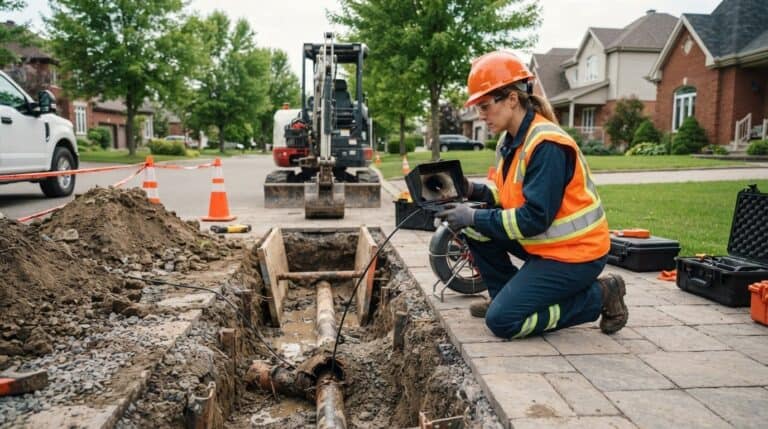
Before Excavating a Sewer Line: 7 Essential Checks
A sewer line appears damaged, and someone is already discussing opening your driveway or yard. Before authorizing an excavation, several details should be confirmed:…
Read the article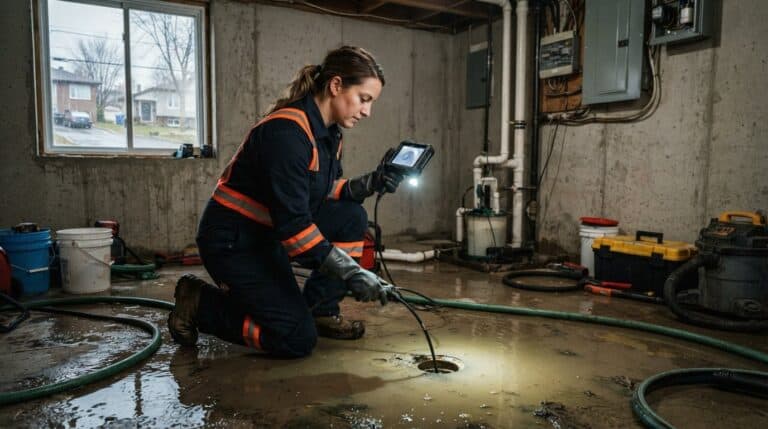
Why Is Water Backing Up Into Another Drain?
Water appearing in a shower, sink or floor drain when another fixture empties is more than an isolated slow drain. This cross-drain reaction usually…
Read the article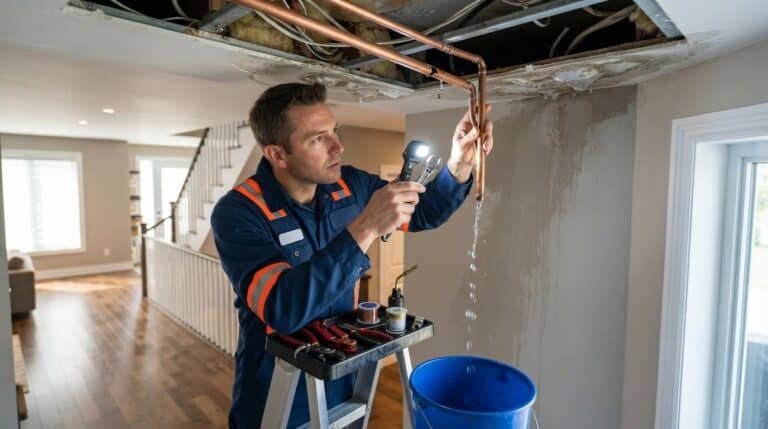
Copper Pipe Leak: What Is Causing It?
A leak in a copper pipe does not automatically mean that all the plumbing needs replacement. One fitting may have failed, the pipe may…
Read the article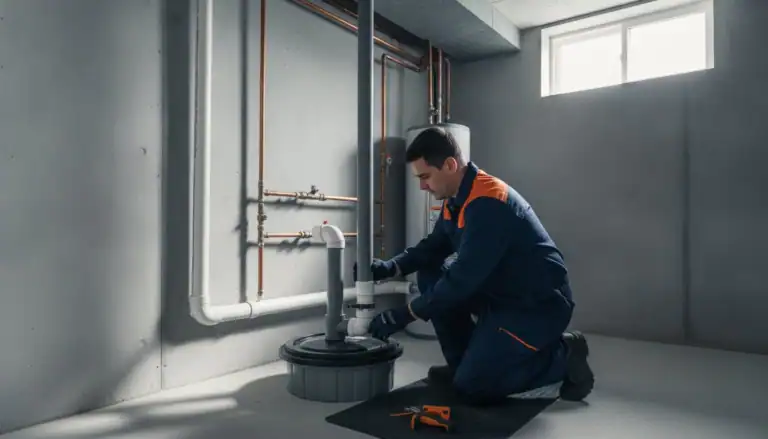
Sump Pump: 8 Warning Signs Before Heavy Rain
A quiet sump pump is not necessarily a healthy one. The basin may simply not have received enough water to activate the pump recently.…
Read the article
Backwater Valve: Which Fixtures Does It Actually Protect?
Seeing a backwater valve access cover in the basement floor can be reassuring. However, its presence does not prove that every toilet, shower, sink…
Read the article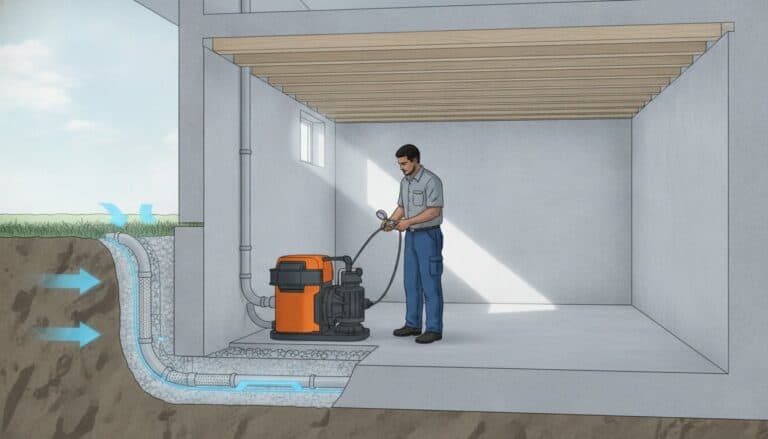
Water in the Basement After Heavy Rain: What Caused It?
Finding water on the basement floor after heavy rain does not automatically reveal the cause. It may have entered through a window, a crack…
Read the article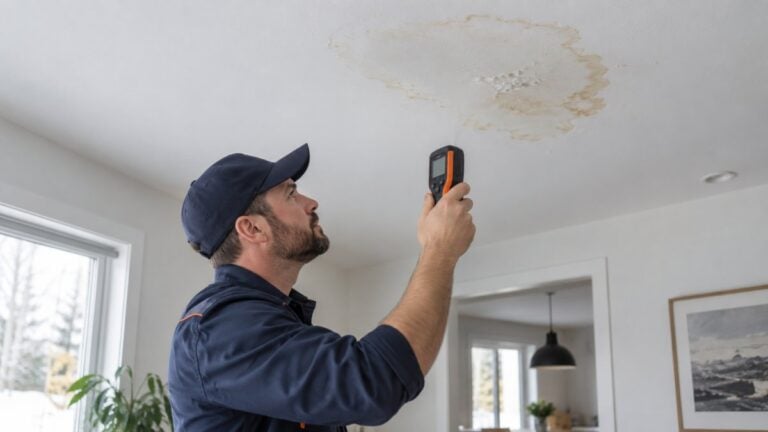
Water Stain on the Ceiling: What Is Causing It?
A water stain on the ceiling confirms that moisture has reached the material, but it does not automatically reveal where the water originated. The…
Read the articleVerified reference points
Official plumbing resources
These sources help verify Quebec requirements and public guidance. They complement a site-specific assessment; they do not replace one.