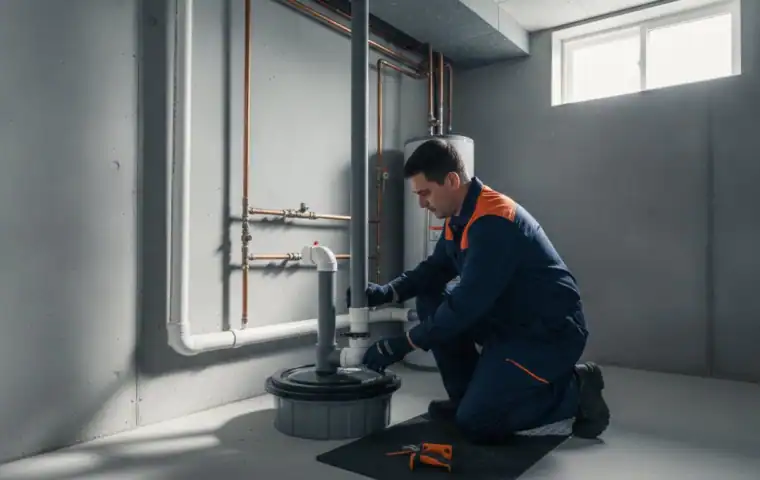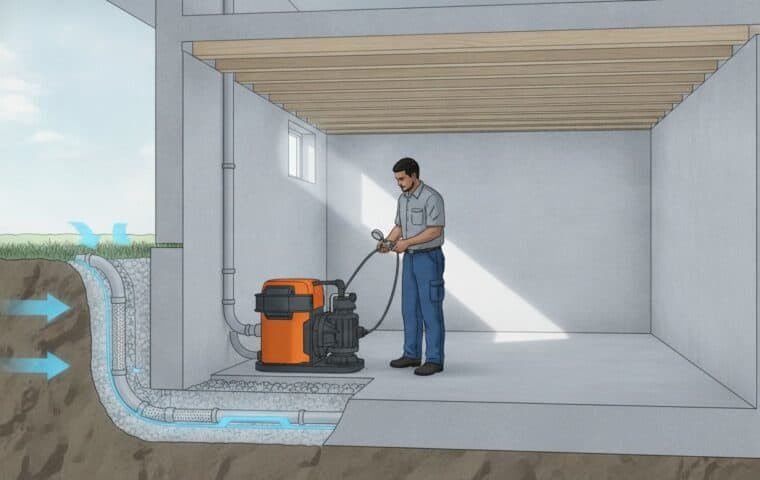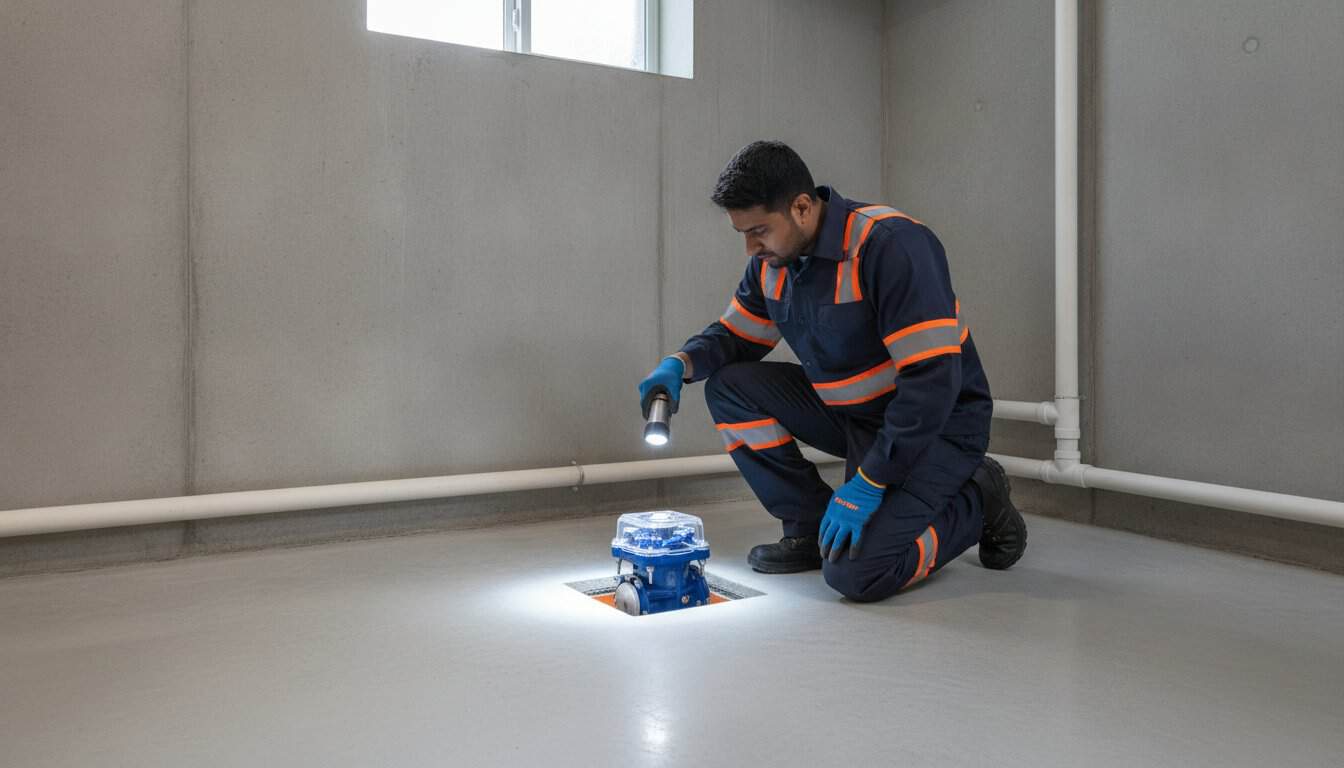
Seeing a backwater valve access cover in the basement floor can be reassuring. However, its presence does not prove that every toilet, shower, sink and floor drain in the home is protected against a sewer backup.
The actual protection depends mainly on where the valve is installed and which fixtures connect to the branch it controls. Two identical-looking valves can therefore protect very different parts of a building.
Short answer: A backwater valve protects the fixtures connected on the building side of the drainage branch where it is installed. It does not automatically create a barrier for the entire plumbing system.
Understanding this distinction helps prevent a false sense of security. It also makes it easier to interpret basement warning signs and ask the right questions before a renovation or after a sewer backup.
Protection follows the path of the drainpipes
During normal use, wastewater leaves the plumbing fixtures and flows toward the drainage system. When flow reverses inside a protected pipe, the valve mechanism closes to prevent that water from travelling back toward the fixtures connected to the branch.
The important word is “connected.”
A basement toilet and shower may share the same branch and be protected by one valve. A floor drain only a few feet away may connect to another pipe. It could be protected by its own device, another valve or no valve at all.
The visible location of the access cover is not enough to determine the full extent of the protection. The valve must be installed on the correct branch, in the proper flow direction and downstream from the fixtures it is intended to protect.
The Régie du bâtiment du Québec explains that sewer-backup requirements are addressed in Chapter III, Plumbing, of the Construction Code. How these requirements apply depends on the building’s actual drainage layout. This linked technical page is available in French.
Why one valve may not protect the entire home
A home can have several drainage branches beneath the concrete slab. Basement fixtures are not always grouped on one pipe, particularly when a bathroom, laundry room or secondary dwelling was added after the original construction.
A drainage system may include:
- one branch for the basement toilet and sink;
- another branch for the shower;
- a floor drain with its own protective device;
- a catch basin or sump connected through a separate configuration;
- a separate pipe carrying wastewater from the upper floors.
In this example, a valve on the bathroom branch would not necessarily protect the floor drain. Likewise, a device installed inside a floor drain would not automatically protect the nearby toilet.
The building’s age does not provide a definite answer. Pipes may have been moved during renovations, covered by new flooring or altered when additional fixtures were installed.
Avoid making three common assumptions:
- seeing one access cover and concluding that the entire basement is protected;
- assuming two nearby fixtures share the same drainage branch;
- believing that a valve installed on the largest pipe must be the correct solution.
Which fixtures require the most attention?
Fixtures located below the level of the adjacent street require particular attention because they can become discharge points when water rises in a drainpipe exposed to a backup.
Depending on the building, the fixtures to examine may include:
- the basement toilet;
- a shower or bathtub;
- a bathroom sink;
- a kitchen sink in a basement dwelling;
- a laundry tub;
- the washing-machine drain;
- a floor drain;
- a catch basin;
- certain sumps connected to the drainage system.
A fixture is not automatically exposed simply because it is in the basement. Similarly, a fixture on the ground floor is not automatically protected from every backup. The fixture’s elevation relative to the potential overflow level of the sewer system must also be considered.
The CMMTQ technical guidance on backwater valves explains that several fixtures on the same floor can be protected by one valve when they connect to the same drainage branch. This French-language guidance does not mean that every fixture in a basement necessarily shares that branch.
How to determine what the valve protects
It is not always possible to follow a drainpipe visually once it disappears beneath a concrete slab. Several clues can still help prepare a more accurate assessment.
List every basement fixture
Begin by identifying every fixture and drainage point in the basement. Include less obvious components such as the laundry tub, washing-machine drain, mechanical-room floor drain and any older pipe hidden beneath a cabinet.
Locate the visible access points
Photograph the covers, access ports and cleanouts. Note their positions relative to toilets, walls, the mechanical room and the suspected route of the building sewer.
A round cover in the floor is not always a backwater-valve access cover. It may provide access to a cleanout or another plumbing component. Its shape alone is not enough to identify it.
Review the available documents
Plans, plumbing invoices, inspection reports and photographs taken before the basement was finished may reveal the route of certain pipes. An invoice that simply states “backwater valve installation” is still incomplete if it does not identify the protected branch and fixtures.
Observe which fixtures react together
If flushing a toilet makes a nearby shower react, the two fixtures may share part of the drainage system. This behaviour can also indicate a restriction or venting problem. The article about a gurgling drain explains how to interpret these reactions without jumping to a conclusion.
Confirm the layout when the consequences are significant
A visual inspection of the access points, combined with branch tracing and an understanding of the building, may be necessary before confirming protection. A camera can sometimes help follow a pipe or identify an abnormal condition, but it cannot prove by itself that every basement fixture connects to the valve being examined.
What a backwater valve cannot prevent
A backwater valve addresses one specific risk: reversed flow inside a drainage pipe. It does not prevent every possible cause of water in a basement.
It cannot stop:
- water entering through a foundation crack;
- surface runoff entering through a low window or door;
- groundwater overwhelming a sump;
- a failed sump pump;
- a broken pressurized water-supply pipe;
- leakage from a water heater or appliance;
- an overflow caused by a blockage between a fixture and the valve;
- infiltration originating from the roof or improper lot grading.
If clear water appears after heavy rain, its source should be identified before blaming the backwater valve. The guide on water in the basement after heavy rain helps distinguish infiltration, a sump problem, a plumbing leak and a sewer backup.
A sump pump also serves a different purpose. It removes water collected inside a basin, while a backwater valve blocks flow attempting to return through a drainpipe. One system does not automatically replace the other.
What happens when the valve closes
During normal drainage, wastewater must be able to leave the connected fixtures. If the flow reverses, the valve’s flap moves into the closed position to block the pipe.
While it is closed, wastewater produced on the building side may no longer be able to leave through the protected branch. Flushing a toilet, taking a shower or running a washing machine could cause the water level inside the building’s drainage system to rise.
This is why water use should stop when a sewer backup is occurring or when a backwater valve may be closed. This precaution is especially important when the pipe layout is unknown.
A system that separates upper-floor drainage from the protected basement branch can reduce this risk. However, this separation should never be assumed based only on the building’s appearance.
Do not attempt to force or manually open a backwater valve during a backup. Contaminated water may be held behind the mechanism.
Three valve types with different applications
The presence of a flap does not mean that every backwater valve can be used in the same location. The CMMTQ identifies three main categories.
Normally closed backwater valves
The flap remains closed at rest and opens when wastewater flows in the proper direction. Because this type of valve does not permit the free circulation of air, it cannot be installed on a main building drain that must ventilate the drainage system.
It may be appropriate for certain fixture branches, depending on the plumbing configuration and applicable requirements.
Normally open backwater valves
This type normally allows air and wastewater to pass. Its mechanism closes when the flow reverses.
Quebec’s regulatory framework may permit a normally open valve on a main building drain under specific conditions, including when the drain serves only one dwelling. However, the CMMTQ notes that some municipalities do not permit this configuration. Approval should never be assumed based only on the building type.
Insert-type backwater valves
An insert valve is designed for installation inside certain floor drains. Its use may be permitted or prohibited by the municipality. It protects the floor drain where it is installed, not automatically the other basement fixtures.
Pipe diameter alone is not enough to select a valve. Venting, branch configuration, protected fixtures, accessibility and municipal requirements must also be considered.
Permanent access is part of the protection
A backwater valve must remain accessible so it can be inspected, cleaned, repaired or replaced. A device buried beneath flooring or hidden behind permanent cabinetry may be practically unusable when it needs attention.
The CMMTQ states that access must be maintained and that property owners should avoid concealing valves during renovations.
Before installing new flooring, cabinetry or a partition, verify:
- whether the cover can be removed completely;
- whether there is enough space to reach the mechanism;
- whether the access point will remain identifiable;
- whether water or debris could accumulate around the cover;
- whether flooring would need to be demolished for future maintenance.
A removable mat placed over a clearly identified access point does not create the same problem as continuous laminate flooring or tile installed directly over the cover.
Maintenance frequency should not be presented as one universal rule. It can depend on the model, the manufacturer’s instructions, building use, previous backups and local requirements. A check is particularly appropriate after a backup, after work that produced construction debris or when the mechanism has been inaccessible for an extended period.
Warning signs that justify an assessment
A backwater valve can be present without providing the protection expected. An assessment is especially useful when:
- no one knows which fixtures connect to the valve;
- the access cover is missing, hidden or covered;
- the basement has been renovated since the valve was installed;
- one fixture backed up despite the presence of the device;
- some fixtures appear protected while others have overflowed;
- the flap appears damaged, deformed or stuck;
- deposits are visible inside an accessible valve body;
- several drains are slow or gurgling;
- roots, a displaced joint or another obstruction are suspected;
- the only available information is an old statement from a previous owner.
A backwater valve does not remove a blockage. If wastewater cannot reach the valve because an obstruction is located on the building side, an indoor overflow can occur without any reverse flow from the sewer. Professional drain cleaning and unclogging addresses a different problem from sewer-backup protection.
The municipal requirement that changes the answer
Local requirements can change how sewer-backup protection must be arranged.
In Laval, the municipal diagram for sewer backups and combined service connections indicates that branches receiving wastewater or infiltration water from fixtures below the crown of the street must be protected. The French-language document also states that no valve may be installed on the main collector and that valves and cleanouts must remain accessible and maintained.
This local direction is important because it prevents a general recommendation such as placing one valve on the main drain to protect an entire home from being applied automatically.
It also explains why simply choosing the “best backwater valve” is not enough. Before selecting the product, the drainpipe route, protected fixtures and requirements for the property must be established.
Municipal regulations and technical documents can change. The current version should therefore be checked when work is being planned.
What to do during an active sewer backup
If contaminated water rises through a toilet, shower or floor drain, the priority is not to dismantle the backwater valve.
Instead:
- Stop using toilets, faucets, showers, the washing machine and the dishwasher.
- Keep people and pets away from contaminated water.
- Do not open the valve cover while the pipe may be under pressure.
- Do not enter an area where water may be touching outlets, panels or powered equipment.
- Photograph the source of the water and affected fixtures only if this can be done safely.
- Request assistance to determine whether the problem is a sewer backup, an internal blockage or another source of water.
Hydro-Québec provides electrical safety guidance for water damage and flooding. When an electrical hazard may be present, do not enter the flooded area to reach the electrical panel.
After the incident: document before drawing conclusions
A sewer backup does not automatically mean that the valve was missing or defective. The water may have travelled through an unprotected pipe, resulted from a blockage on the building side or come from a completely different source.
Whenever possible, record:
- the first fixture where water appeared;
- any other fixtures that reacted;
- the time and weather conditions;
- which fixtures were used immediately before the incident;
- the water’s colour, odour and approximate volume;
- the location of visible access covers;
- any recent plumbing or finishing work.
Contact your insurer promptly. Infoinsurance.ca explains that sewer-backup coverage may require an endorsement. It also recommends keeping invoices, photographing the damage and documenting affected belongings.
Having a backwater valve does not guarantee that a claim will be covered. Coverage, limits, deductibles and maintenance obligations depend on the insurance contract.
Frequently asked questions
Does one visible valve protect the entire basement?
Not necessarily. It protects the fixtures connected to the branch where it is installed. Other basement fixtures may use a separate drainpipe.
How can I tell whether the basement toilet is protected?
The route of the toilet’s drainpipe and the position of the valve relative to its connection must be confirmed. The distance between the toilet and the access cover is not sufficient evidence.
Does every floor drain have its own valve?
No. A floor drain may have an integrated device, an approved insert valve, a valve installed on its branch or another form of protection. It may also be unprotected. The actual configuration must be checked.
Does the valve protect against foundation infiltration?
No. It blocks reversed flow inside a drainage pipe. It does not repair a foundation crack, improper grading, a low window, groundwater infiltration or a failed sump pump.
Can plumbing fixtures still be used while the valve is closed?
Water use should stop during a sewer backup. Wastewater produced on the building side may be unable to leave and could rise toward a low fixture. Do not assume that upper floors use a separate pipe unless the drainage system has been verified.
Can a camera inspection confirm that everything is protected?
Not by itself. A camera may help document the condition or route of part of a pipe and identify certain abnormalities. It does not automatically prove how every fixture connects or how the valve will perform under all conditions.
Can the access cover be hidden beneath new flooring?
The valve must remain accessible for inspection, cleaning, repair and replacement. A durable and clearly identified access point should be planned before the floor is finished.
How often should a backwater valve be checked?
Follow the manufacturer’s instructions and applicable municipal requirements. The building’s history, use and recent events also matter. A check is prudent after a backup, after work that may have introduced debris or when the valve has been inaccessible for a long period.
Why might a valve fail to prevent water damage?
The device may protect only part of the drainage system, be obstructed by deposits, be damaged, be installed in the wrong location or be unsuitable for the building’s configuration. The water may also come from a source the valve cannot control.
The essential point
The right question is not simply, “Is there a backwater valve?” The more useful question is, “Which fixtures connect to the branch protected by this valve?”
A reliable answer requires identifying the low fixtures, locating access points, understanding the drainpipe routes and considering municipal requirements. The valve must also remain accessible and free of obstructions.
If the configuration remains unclear, an assessment of the existing backwater-valve installation, replacement or inspection needs can identify the fixtures that are actually protected without assuming that one visible device secures the entire home.