A gurgling sound in a sink, shower or toilet is not enough on its own to pinpoint a plumbing problem. It usually occurs when water and air can no longer move as freely as they should through the drainage system. The sound may accompany a small buildup near one fixture, a restriction farther along a shared pipe or a venting problem.
The most useful clue is not simply the noise. Pay attention to which fixture is gurgling, what was being used immediately beforehand and whether other drains react at the same time. These details help distinguish a situation that can be monitored from one that requires you to stop using water.
The short answer: when should you be concerned?
- One fixture gurgles and drains slowly: a localized restriction may be present in that fixture’s trap or branch line.
- Using another fixture triggers the sound: if flushing the toilet makes the shower or sink gurgle, the problem may be in a shared section of pipe or in the drainage system’s venting.
- Several fixtures begin draining slowly: a restriction farther along the drainage system becomes more likely.
- The water level rises in a toilet, shower or floor drain: stop using water. Continuing to run fixtures could cause an overflow.
- Wastewater backs up: avoid contact with the contaminated water and arrange for professional assistance promptly.
A drain can continue to pass a small amount of water even when it is partially restricted. Do not wait until it is completely blocked before paying attention to recurring gurgling or increasingly slow drainage.
Why does a drain make a gurgling sound?
Every sink, basin, shower and toilet is connected to a system that must carry water away while allowing air to circulate. Traps retain a water seal that helps prevent sewer gases from entering the building, while vent pipes help balance pressure throughout the drainage system. In Quebec, drainage and venting requirements fall under Chapter III — Plumbing of the Construction Code, as explained in the RBQ’s overview of Quebec plumbing regulations.
When a large volume of water flows through a pipe, it displaces air. If that air encounters a restriction or cannot follow its normal path, it may pass through the water held in a trap and produce the familiar gurgling sound. The noise therefore indicates an imbalance, but it does not automatically prove that a clog is located directly beneath the noisy drain.
Watch the pattern, not just the sound
The same sink gurgles after it is used
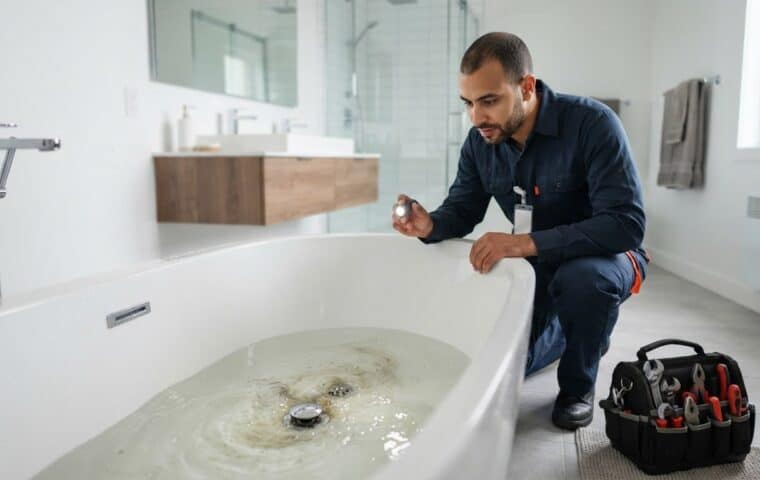
When the sound remains limited to one sink that is also draining more slowly, the problem may be close to that fixture. In a kitchen, food residue and cooking grease can gradually reduce the available space inside the pipe. In a bathroom, hair, soap and other deposits can collect around the drain opening or farther along the branch line.
Start by checking an accessible strainer or stopper without taking the plumbing apart. If the sound and slow drainage continue after visible debris has been removed, the restriction may be beyond what can safely be reached from the surface.
Flushing the toilet makes the shower or sink gurgle
This pattern deserves more attention. A toilet releases a substantial volume of water quickly. If a nearby fixture reacts, both fixtures may share part of the same drainage line or be affected by the same venting problem.
Watch the water level as well. A sound or slight vibration is not equivalent to water rising in the shower or toilet. As soon as water begins to back up, do not repeat the test “just to make sure.” Every additional discharge can make the situation worse.
Several drains react in different rooms
A single slow basin often points to a localized problem. Gurgling in several rooms, toilets reacting to one another or movement in a basement floor drain may indicate a restriction in a shared pipe.
In this situation, immediately limit water use. The dishwasher, washing machine, shower and toilets all discharge water into the same system. A partially blocked pipe may appear to cope for a few minutes and then overflow at the building’s lowest drainage point.
A rarely used drain mainly produces an odour
A floor drain or basin that has not been used for an extended period can lose part of its trap seal through evaporation. Slowly pouring water into the drain may restore that barrier. This simple check is appropriate only when there is no backup, abnormal drainage or other sign of a sewer problem.
If the odour returns quickly, the drain gurgles when other fixtures are used or water begins to rise, look for another cause instead of simply masking the smell.
Four possible causes of a gurgling drain
1. A partial obstruction near the fixture
A pipe does not have to be completely blocked to become noisy. A buildup can reduce its interior diameter, slow the water and interfere with airflow. The symptoms often begin at a single fixture before spreading to other parts of the system.
2. A restriction in a shared branch line
When several fixtures share a pipe, an obstruction downstream can cause them to react together. The fixture making the noise is not necessarily the one closest to the problem. This is why the timing of the gurgling is often more useful than trying to diagnose the issue based solely on the room where the sound is heard.
3. Venting that is no longer working properly
A blocked, improperly connected or inadequate vent can disrupt pressure and drainage. This type of problem cannot be corrected by pouring a product into the drain. You should also never climb onto the roof to inspect a vent outlet yourself, particularly in rain, snow or icy conditions.
4. Damage or intrusion inside a pipe
Symptoms that keep returning after a drain has been cleared may sometimes be associated with roots, a displaced joint, deformation, a sagging section of pipe or a foreign object. These possibilities should not be presented as facts without evidence. A drain camera inspection becomes most useful when the problem recurs, pipe damage is suspected or the findings are needed to plan a repair.
What you can check without taking the plumbing apart
Before requesting service, a few observations can help describe the problem more accurately:
- Note which fixture began gurgling first.
- Check whether it drains normally, slowly or not at all.
- Observe whether the toilet, shower, basin or floor drain reacts when another fixture is used.
- Watch whether the water level rises, drops unexpectedly or remains stable.
- Note any sewer odour and when it appears.
- Mention any recent blockage, cleaning attempt or product placed in the drain.
You can remove hair or visible debris from an accessible strainer. However, do not open a cleanout if you suspect wastewater is being held behind its cap. Do not introduce a powered drain snake or high-pressure equipment into a sewer connection yourself.
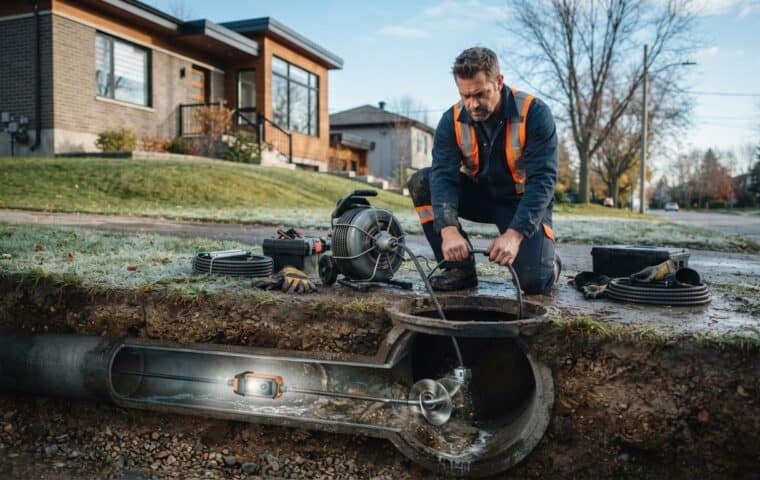
Before certain types of sewer-unblocking work outside a building, the CMMTQ advises checking that no gas line crosses the sewer pipe. Its sewer-unblocking safety guidance explains in French why this work should be left to a qualified contractor.
Be cautious with chemical drain cleaners
A chemical drain cleaner does not reveal where a restriction is located or what caused it. If the chemical remains trapped in the pipe, it can also expose anyone who later removes the trap or uses mechanical equipment.
Never mix different cleaners or drain-opening products. Health Canada recommends following the instructions and hazard symbols on the label and never mixing household chemicals. If a product has already been used, keep the container and tell the plumber before work begins. Review Health Canada’s household chemical safety guidance for proper handling and storage practices.
When should you stop using water?
Stop using fixtures connected to the drainage system and request help promptly when:
- water rises in a shower, bathtub, toilet or floor drain;
- several fixtures gurgle or drain slowly at the same time;
- wastewater or sewage appears at the building’s lowest drainage point;
- the problem becomes worse whenever a toilet is flushed or another fixture empties;
- an overflow is occurring or threatens the building’s materials.
Closing the water-supply valve behind a toilet may prevent its tank from refilling, but it does not clear the drainage pipe. If several fixtures are affected, the most important step is to stop adding water to the system.
House, condo or commercial property: the building changes the diagnosis
In Laval, Montreal and across the North Shore, the same gurgling sound may not have the same meaning in a single-family home, duplex, rental building, condominium or commercial property. The layout of the drainage system, the number of occupants and the presence of shared pipes can change the scope of the problem.
- In a house, determine whether the symptom remains limited to one room or also appears in the basement and on other floors.
- In a duplex or rental building, ask whether another unit has noticed the same problem and notify the owner or property manager promptly. When several units are affected, the investigation may need to focus on a shared pipe.
- In a condominium, inform the condominium board or property manager when several units or a shared stack may be involved. Do not wait until you have personally determined whether the affected portion of the system is private or shared.
- In a commercial property, limit the use of fixtures in the affected area and note which equipment was operating when the symptoms appeared. A drainage problem may require an approach adapted to the building’s activities and operating hours.
In Laval, water and sewer service connections are governed by the City’s municipal service-connection regulations, available in French. This does not mean that a gurgling sound originates in the municipal system. The first step is to distinguish between a problem near one fixture, within the building’s private drainage system or farther along the service connection. Gurgling alone cannot establish municipal responsibility or justify excavation.
How is the problem checked?
An effective assessment begins with the symptoms: which fixtures are affected, in what order, for how long and following which use. The available access point and plumbing configuration then determine the appropriate method.
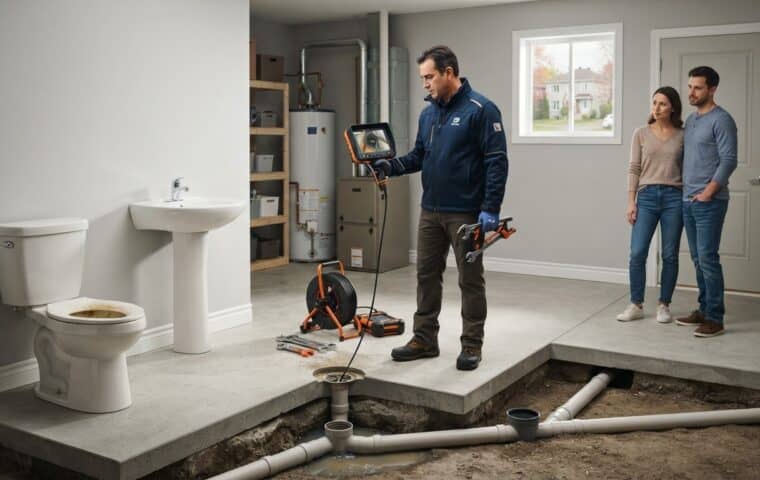
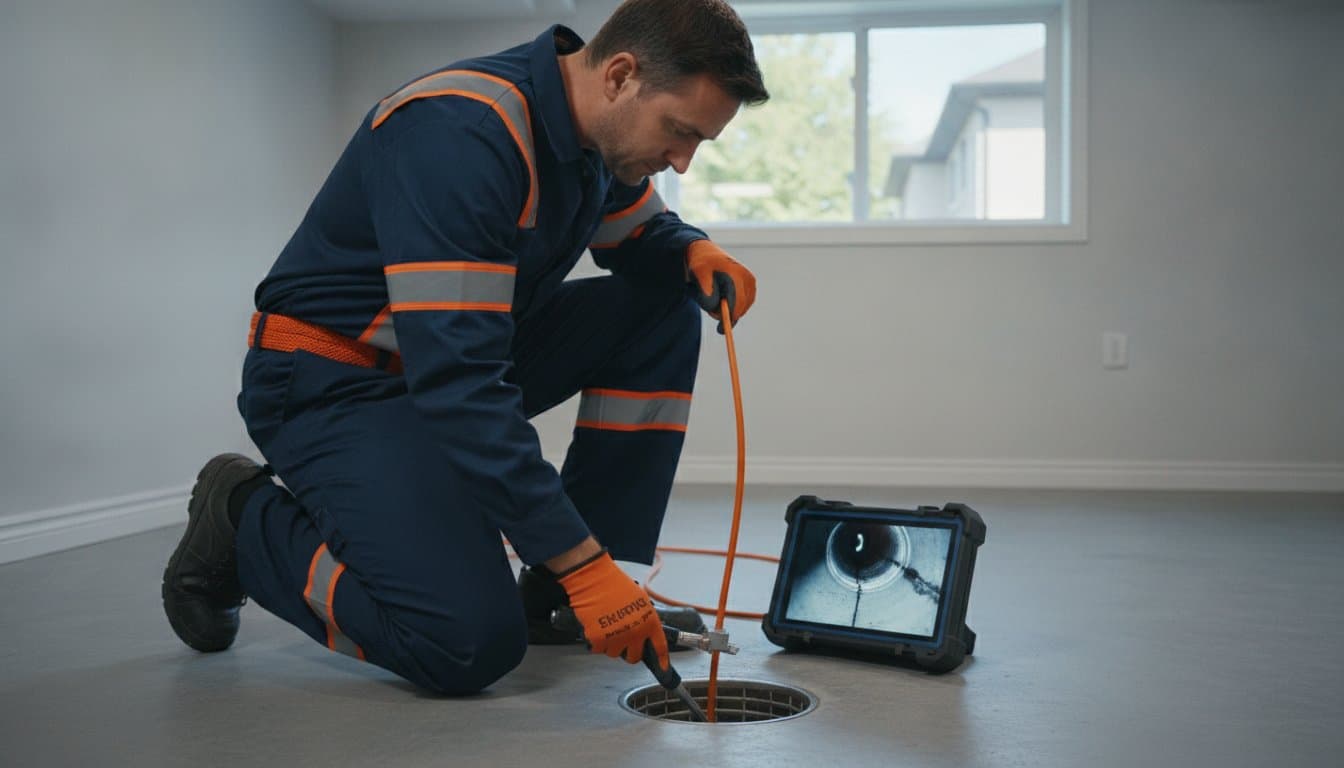
Depending on the situation, drain clearing or professional drain cleaning may be enough to restore and test the flow. A camera is not automatically required for every slow sink. It becomes more useful when the blockage returns, important clues remain unexplained or the visible condition of a pipe must be checked before more extensive work is recommended.
This progression avoids two mistakes: treating every gurgling sound as a simple surface clog or, at the opposite extreme, concluding too quickly that excavation is required.
How can you reduce the risk of the problem returning?
Prevention depends mainly on what enters the drainage system and how quickly you respond to the first changes:
- use strainers and regularly remove visible hair and debris;
- wipe grease from cookware before washing it and dispose of it appropriately instead of pouring it into the sink;
- do not flush wipes, dental floss, hygiene products or food;
- do not assume that a product labelled “flushable” will break down safely inside the plumbing;
- have a drain checked when it repeatedly slows down or gurgles instead of relying on multiple temporary solutions.
The City of Montreal advises that only toilet paper should be flushed. It specifically notes that hair and cooking grease are not soluble and can contribute to clogged pipes, sewer backups and wastewater overflows.
There is no universal rule requiring high-pressure drain cleaning every three or five years. The appropriate frequency depends on how the building is used, its blockage history, the pipe materials and what an actual inspection reveals.
A sound that must be interpreted in context
A gurgling drain is a clue, not a diagnosis. A sound isolated to one fixture, several drains reacting together and water rising in a basement floor drain do not call for the same response. By noting when the sound occurs, which fixtures are affected and how the water level changes, you provide far more useful information than you would by trying to guess the cause.
If the gurgling persists, returns regularly or is accompanied by slow drainage, Plomberie Laval can determine whether targeted drain clearing is sufficient or whether further investigation is justified. If wastewater is backing up, stop using water and have the situation stabilized without delay.
Frequently asked questions
Can I ignore a gurgling drain if the water still flows?
A single sound without any other symptom can be monitored. However, recurring gurgling, increasingly slow drainage or another fixture reacting indicates that the situation should be checked before the pipe becomes fully blocked.
Does gurgling always mean that the main drain is clogged?
No. The problem may be limited to the trap or branch line serving one fixture. A shared drainage pipe becomes more suspect likely when several fixtures are affected, particularly if water rises at the building’s lowest drainage point.
Why does the shower gurgle when I flush the toilet?
The toilet and shower may share part of the drainage system or be affected by the same venting problem. If water rises in the shower or its drain also becomes slow, stop repeating the test and arrange for an assessment.
Does every gurgling drain require a camera inspection?
No. A camera is most useful when the problem keeps returning, pipe damage is suspected or the findings are needed to guide a repair. A completely blocked pipe may need to be cleared before the camera can provide useful images.