Finding water on the basement floor after heavy rain does not automatically reveal the cause. It may have entered through a window, a crack or the joint between the wall and floor. It may also have come from an overflowing sump pit, a backing-up drain or even a plumbing leak that happened at the same time.
The most useful first clue is not the amount of water. It is the exact place where the water first appeared, followed by when it arrived, how it looked, whether it had an odour and how the plumbing fixtures reacted.
Key point: a sump pump, a backwater valve, a foundation-crack repair and an exterior drainage correction do not manage the same path of water. Identifying that path before choosing the work helps prevent unnecessary repairs and incorrect conclusions.
The short answer: start with the entry point
When the situation can be observed safely, look for the first wet area rather than the lowest point where all the water eventually collected.
- Water rises through a floor drain, toilet or shower: a backup in the drainage system is possible, especially if the water is dirty, smells like sewage or contains debris.
- The level rises inside a sump pit: incoming water may be exceeding the available pumping capacity, or the pump, float, discharge line or power supply may not be working correctly.
- Water appears at the bottom of a wall or along the wall-floor joint: saturated soil, foundation drainage or the building envelope may be involved.
- A stream follows a crack or the edge of a window: surface water may be finding a specific opening through the foundation or around the window.
- The puddle begins beneath a pipe, water heater or appliance: a plumbing leak should be considered even when it is raining outside.
- There is no puddle, but cold surfaces feel damp: condensation may explain at least part of the moisture.
These signs help narrow the possibilities, but they do not provide a complete diagnosis on their own. Water can also travel behind a finished wall or beneath flooring before becoming visible.
The first steps to take without putting yourself at risk
Safety comes before identifying the cause. A wet basement may place water, electrical outlets, extension cords, appliances and an electrical panel in the same area.
- Do not enter the water if it is near an electrical source. Do not touch the sump-pump plug, an appliance or the electrical panel while standing on a wet floor. Follow Hydro-Québec’s flood and electrical-safety instructions. If water begins entering the basement, the Gouvernement du Québec advises residents not to touch anything and to contact Hydro-Québec.
- Stop using the plumbing if wastewater appears to be backing up. Flushing a toilet, taking a shower or running a washing machine can add more water to the affected drainage system.
- Shut off the water supply only if a pressurized leak is likely and the valve is accessible from a dry area. Do not cross a flooded area to reach it.
- Keep people and pets away from potentially contaminated water. Water that looks clear is not necessarily clean.
- Move unaffected belongings to a dry location if this can be done safely. The Gouvernement du Québec’s flood-protection guidance recommends moving basement items to a higher level when water threatens to enter.
- Take photos and short videos. Document the suspected entry point, water depth, affected equipment and damaged materials before cleanup, when it is safe to do so.
Never use a generator, gasoline-powered pump or other fuel-burning appliance indoors to dry a basement. Carbon monoxide can accumulate without warning.
What each entry point may indicate
Water is coming from a drain or plumbing fixture
Water rising through a floor drain, shower, toilet or another low fixture directs attention toward the drainage system. A sewage odour, debris, grey or brown colouring and several fixtures reacting together make this possibility more likely.
If flushing a toilet makes another fixture gurgle, or several drains slow down together, read the guide about a gurgling drain. During an active backup, however, do not keep testing the system with more water. A blockage on the private side, a service-connection problem or conditions farther downstream can produce similar signs.
The water level is rising inside the sump pit
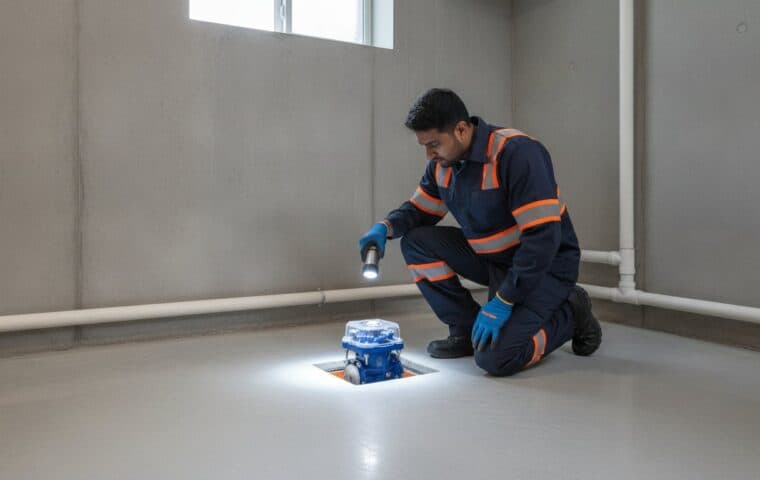
A sump pit that fills during rainfall is receiving water. If the level continues to rise, the cause may be a stuck float, a power failure, a failed pump, a blocked or frozen discharge line, water returning to the pit or an incoming flow greater than the pump can handle.
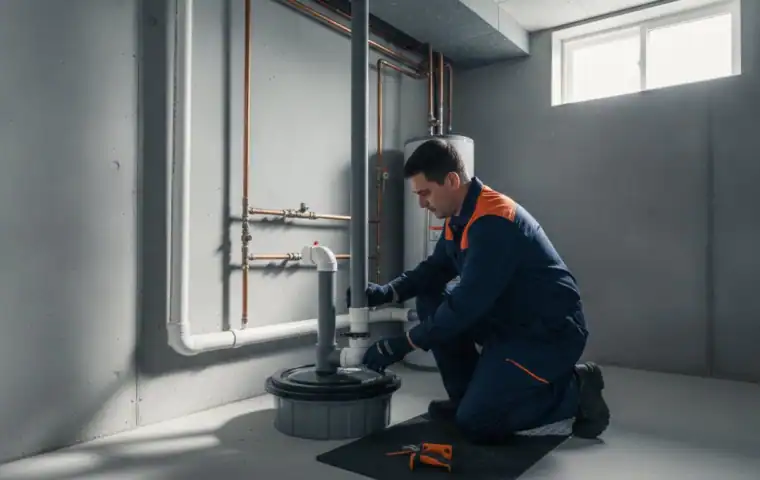
Observe only from a dry area. Do not place your hand in the pit or handle a plug while standing on a wet floor. The page about sump-pump installation and replacement explains the roles of the basin, float and discharge line.
Water appears where the wall meets the floor
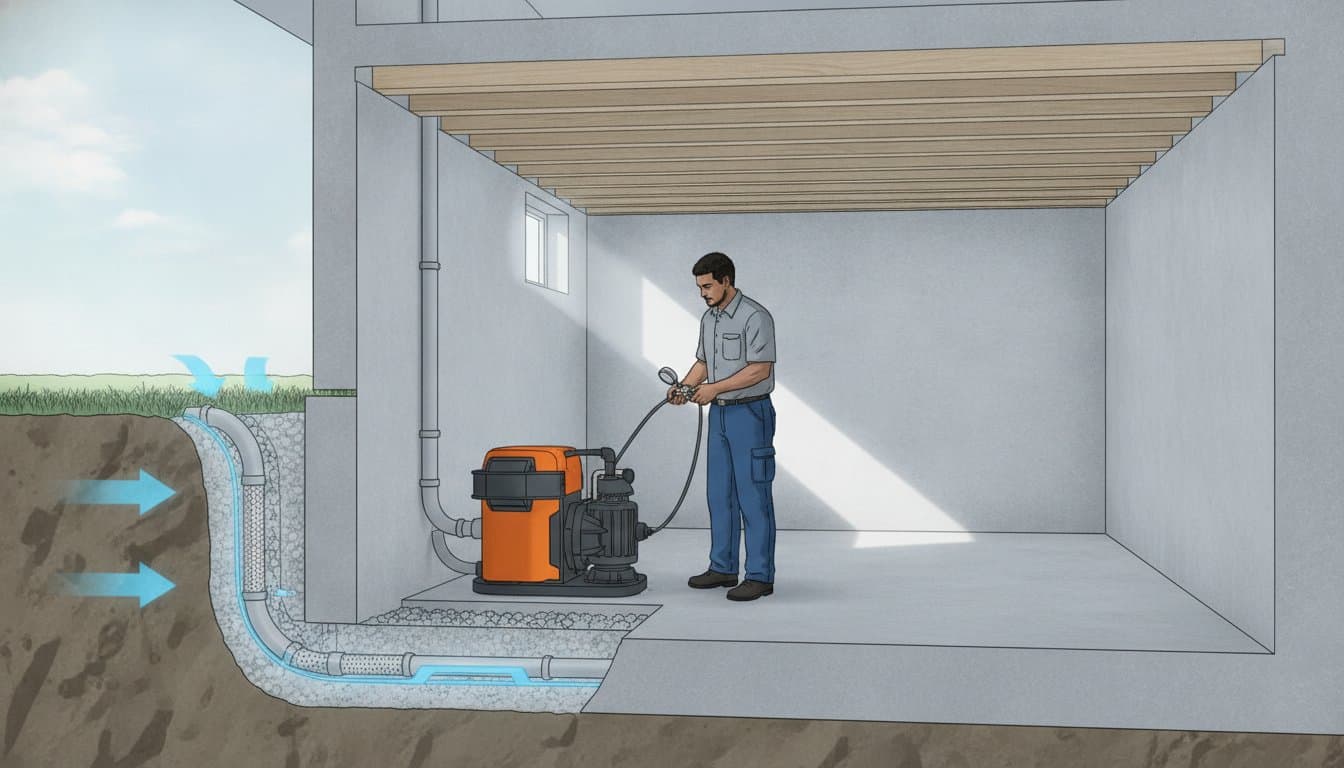
Water along the basement perimeter may follow the joint between the foundation wall and the concrete slab. Saturated soil, a large amount of water near the foundation or inadequate foundation drainage are possible causes. The deepest part of the puddle is not necessarily the source because water can travel several metres across a sloped floor.
A stream follows a foundation crack
Document the location, direction and apparent width of a wet crack. Do not immediately cover it with a finish or apply a randomly selected sealant. The appropriate method depends on the foundation type, concrete condition, possible movement, access and the water’s path. A foundation specialist may be needed when the concern involves the building envelope or structure rather than the plumbing.
Water enters through a window, door or exterior stairwell
A full window well, blocked exterior drain, low threshold or grading that directs runoff toward the house can create a rapid entry point. After the rain, check for debris, overflow marks and the apparent route of the water. Do not dismantle a drain or excavate beside the foundation while the soil is saturated.
The puddle begins beneath a pipe or appliance
The timing of the rain may be misleading. A pipe, water heater, washing machine, exterior faucet or fitting can leak independently of the weather. A localized accumulation that continues after the rain is more likely to require water-leak repair.
The walls are damp without a visible entry point
A cool basement can develop condensation when warm, humid air reaches colder surfaces. Sweating pipes, widespread dampness and no clear water path may point in this direction. The Gouvernement du Québec’s guide to basement moisture distinguishes indoor moisture sources from exterior infiltration. A dehumidifier can help manage the air, but it cannot correct liquid water entering the basement.
When the water appears provides an important clue
The timeline can reduce the number of likely causes. Record when the rain began, when the water was first noticed and what was happening inside the building.
- During the first minutes of an intense downpour: look first at windows, window wells, doors, downspouts and areas where surface runoff may collect.
- After several hours of rain or during a thaw: progressively saturated soil, foundation drainage and the pumping system become more relevant.
- During a power failure: without touching wet equipment, determine whether the pump stopped while water continued entering the pit.
- When a toilet, shower or washing machine is used: the drainage system may be involved, especially if another fixture reacts.
- Even during dry weather: also investigate plumbing leaks, condensation and moisture sources unrelated to precipitation.
These are clues, not proof. Two problems can occur at once, such as a pump stopping during an outage while a window well overflows during the same storm.
Sump pump and backwater valve: two different functions
Confusing these two devices often leads to the wrong solution.
A sump pump moves water that has reached a basin. It depends on electricity, a free-moving float, sufficient capacity and a working discharge line. It does not stop wastewater from reversing through a sewer branch.
A backwater valve closes against reverse flow in the drainage branch it protects. It does not remove water collecting around the foundation or empty a sump pit. Its presence also does not mean that every basement fixture is necessarily protected by that one device.
If water is rising inside a pit, review the information about sump pumps. If water is coming back through a drain or plumbing fixture, the backwater-valve page explains protection against reverse wastewater flow. The observed source determines which path is relevant.
The RBQ explains in its French technical guidance that contractors must verify the type of connection required by the municipality before selecting a sump pump. The existing configuration and local requirements therefore matter as much as the horsepower printed on the box.
What a camera inspection can confirm, and what it cannot see
A drain camera shows the inside of an accessible pipe. It can help reveal a blockage, roots, deformation, a displaced joint, a break or buildup within the inspected section.
It cannot directly show the condition of an exterior waterproofing membrane, the outside face of a foundation wall, the precise path of water through the soil, a crack hidden behind finished materials or the overall performance of foundation drainage. Camera footage alone therefore cannot establish that the foundation must be excavated.
A drain camera inspection becomes relevant when the symptoms suggest that a pipe may be involved and an appropriate access point exists. If water is clearly passing through a window or foundation crack, the investigation must also include the building envelope and surface drainage.
Exterior checks to make after the rain
Wait until conditions are safe. Do not climb a ladder during a storm or walk through an area where the ground is unstable.
- Check where downspouts release water and whether it flows back toward the foundation.
- Look for grading that directs runoff toward the house instead of away from it.
- Check visually whether a window well contains water, soil or leaves.
- Look for overflow marks near an exterior door or stairwell.
- Note where snow had been piled before a rapid thaw.
- Compare the wet side of the basement with what is directly outside.
- Photograph exterior puddles, downspouts and grading before the evidence disappears.
In Laval, the City’s French-language resource on water accumulation, infiltration and sewer backups helps distinguish these situations and shows why each requires a different response. It provides a useful local reference without implying that the municipal system is automatically responsible.
Why Quebec conditions change the investigation
An intense summer downpour, several consecutive days of rain, a thaw over frozen ground and rapid snowmelt do not affect a house in the same way. Freezing conditions may also affect an inadequately protected discharge line or temporarily change the path of surface water.
In a Laval home, the age of the building, drainage layout, finished basement, previous modifications and existing discharge point can completely change the diagnosis. Two neighbouring homes may experience the same rainfall but have different causes of basement water.
It is also important to distinguish outdoor flooding, water infiltration through the building envelope, a sewer backup and an indoor leak. That distinction matters for the corrective work and for insurance. The weather supplies context; the entry point provides the technical clue.
Document the damage, dry the area and limit further losses
Contact your insurer promptly when damage is significant. According to Infoinsurance, coverage varies according to the source of the water, and situations such as infiltration or sewer backup may require an endorsement. Your insurer can also explain which emergency work is authorized and what evidence should be retained.
Before discarding an item, photograph it and check your insurer’s instructions unless it creates a health hazard. Keep invoices, receipts and an inventory of affected materials and belongings.
Drying should begin quickly once the area is safe and the water has been removed properly. The Gouvernement du Québec recommends completely cleaning and drying water damage within 24 to 48 hours, because mould may begin to develop after that period. Heavily damaged porous materials such as drywall, insulation and carpet may need to be removed.
There is no need to label every stain as “toxic mould.” The practical priority is to stop the water source, remove or clean affected materials correctly and dry the structure. A large affected area, sewage contamination or materials that are difficult to reach justify help from a qualified post-loss restoration company.
Which professional should you call?
The appropriate professional depends on the likely source, and a major loss may require more than one trade.
- A plumber: water coming from a drain or plumbing fixture, an overflowing sump pit, a failed pump, a backwater valve that needs assessment, a leaking supply pipe or a suspected drainage problem.
- A foundation or waterproofing specialist: an active crack, water passing through a wall, a building-envelope concern or exterior drainage that needs assessment.
- A post-loss restoration company: water extraction, saturated materials, controlled drying, cleaning or widespread contamination.
- A master electrician: outlets, panels, wiring or electrical equipment affected by water, or restoring service after flooding.
- The insurer: confirmation of coverage, documentation requirements and possible coordination of covered work.
A plumber can diagnose accessible plumbing and drainage components, but does not automatically replace a foundation expert, electrician or remediation team.
Information to record before requesting an assessment
A precise description makes triage faster and reduces assumptions. If possible, record:
- where the water was first seen;
- the approximate time and duration of the rain;
- the water’s colour, odour and any debris;
- which fixtures gurgled, drained slowly or backed up;
- the level in the sump pit and how the pump behaved;
- any power outage that occurred at the same time;
- how long water continued entering after the rain ended;
- nearby pipes, windows, cracks or appliances;
- recent work on the property, basement or plumbing;
- photos and videos taken during the event.
Do not erase every trace before documenting it. Water lines, deposits, marks on drywall and peeling paint may help reconstruct the route the water followed.
Mistakes that often make the diagnosis more difficult
- Buying a more powerful pump without checking the basin and discharge line. A sewer backup, stuck float or blocked pipe is not corrected simply by adding horsepower.
- Assuming one backwater valve protects the entire house. It protects the branches covered by its configuration and must remain accessible.
- Running water to “test” the system during a backup. This can make the accumulation worse.
- Immediately sealing a wet crack. The source, possible movement and water pressure should be understood before selecting a repair method.
- Assuming a camera can see through the soil or foundation. It shows the inside of the pipe being inspected.
- Closing a wall or reinstalling flooring too soon. Materials that remain damp can trap moisture behind the new finish.
- Waiting for a second flood before documenting the first. Evidence observed during and immediately after the rainfall is often the most useful.
Frequently asked questions
Why does water enter only during very heavy rain?
An intense downpour may temporarily exceed the capacity of a drainage path, fill a window well, concentrate runoff against the foundation or raise the water level rapidly inside a sump pit. The fact that the problem disappears in dry weather does not identify which of these mechanisms is responsible.
How can I distinguish a sewer backup from water infiltration?
A sewer backup often appears through a floor drain, toilet or shower and may contain debris, have an odour or show grey or brown colouring. Infiltration is more likely to enter through an opening, crack or the perimeter of the slab. These clues are not absolute, so avoid contact with water whose source is uncertain.
Does a sump pump prevent a sewer backup?
No. A sump pump removes water that reaches its basin. A backwater valve addresses flow attempting to reverse through a drainage branch. Both devices can be present in the same house while serving completely different purposes.
Is the weeping tile always responsible for a wet basement?
No. Water may come from surface runoff, a window well, a crack, a sump-pump problem, a sewer backup, an indoor leak or condensation. Foundation drainage becomes a valid possibility when the signs and building configuration support it, not an automatic conclusion.
Should I call the insurer before cleaning?
Contact the insurer as soon as possible, document the damage and ask which urgent measures are expected. You should still limit further damage when it can be done safely. Keep invoices, receipts and visual evidence.
When does the situation become urgent?
Treat it as urgent if water is rising quickly, reaching electrical equipment, contains sewage, continues escaping from a pipe, threatens important equipment or can no longer be controlled by the pump. Do not expose yourself to danger while attempting an improvised repair.
The right solution begins with the right source
After heavy rain, do not choose an intervention simply because water is present in the basement. First identify the entry point, timeline, odour, appearance of the water and how the drains or sump pit reacted.
If the water comes from a drain, plumbing fixture, pipe or sump pit, these observations will help a plumber assess the relevant part of the system. If it passes through a window, crack or another part of the building envelope, they will help direct the matter to the appropriate specialist. A correct diagnosis protects the basement more effectively than choosing a solution before understanding the water’s path.