A growing puddle, a jet of water or a suddenly soaked patch of ground may make you suspect a water line break. Some situations call for quick action, but those signs do not identify the failed pipe by themselves. The water could come from an indoor fitting, the building’s water service line, an appliance, seepage or the municipal system.
First, keep people safe and limit the flow without crossing a hazardous area. This guide explains what to observe, which steps you can take safely and when to involve a plumber or the municipality.
Key takeaways
- A continuous leak or a puddle that keeps growing needs prompt attention. Low pressure alone does not prove that a pipe has broken.
- Keep people away from water reaching electrical outlets, appliances or the electrical panel. Do not enter a flooded basement to reach a valve or the panel.
- Close only an indoor shutoff valve that you recognize and can reach safely. Do not force a stuck valve.
- Note where and when the water appears, whether it keeps flowing and whether several fixtures are affected. These observations help an assessment but cannot establish the cause.
- In Laval, call 311 when a problem may affect public space or require a municipal response. Check official water notices if the neighbourhood’s supply changes.
Table of contents
- What signs call for a water pipe inspection?
- What should you do first to stay safe?
- How can you describe the location without diagnosing the break?
- When should you contact the City or a plumber?
- What information should you prepare for the next step?
- Frequently asked questions
- In summary: protect people, record the signs, arrange an assessment
What signs call for a water pipe inspection?
Visible water that does not stop is the clearest warning sign: water sprays from a pipe, runs quickly from a fitting or collects while no fixture is in use. A growing puddle near the building’s water entry, a new wet patch along the foundation or water surfacing from the ground also deserves prompt attention. The place where water becomes visible is not necessarily the place where the pipe failed.
A sudden drop in pressure or flow at several taps may occur with a supply problem. Municipal work or an interruption, a partly closed valve or another cause can produce a similar change. If only one tap is affected, the problem may be local to that fixture. Do not run more water just to recreate a significant leak.
Also notice when the water appears. A wet area that grows even when no fixtures are being used may point an inspection toward a pressurized supply pipe. A mark that appears after rain, a shower or an appliance drains may have another source. For a ceiling mark, Water Stain on the Ceiling: What Is Causing It? explains which observations are useful without jumping to a conclusion.
What should you do first to stay safe?
1. Keep people clear of the water. Do not let occupants or pets enter the wet area. If water is approaching an outlet, appliance, cable or electrical panel, do not touch the installation or walk through water to reach a switch. Hydro-Québec’s water damage and flooding guidance explains the electrical risk. If water has begun entering the basement, the Gouvernement du Québec advises contacting Hydro-Québec rather than trying to reach the electrical panel.
2. Shut off water only if you can do so safely. If the leak appears limited to one fixture, you may be able to close its identifiable shutoff valve. If it involves the building’s plumbing, consider the indoor main shutoff only if you know which valve it is, can reach it along a dry route and can turn it easily. Do not force a stuck valve. Do not operate the outdoor service box or a valve associated with the municipal system. The City of Laval’s service-connection guidance (in French) describes the procedures for shutoff and reopening.
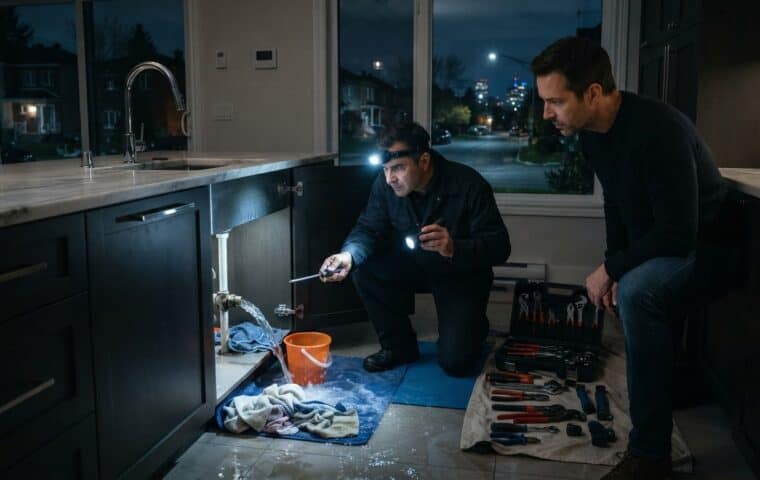
3. Limit damage from a safe position. Placing a container or moving belongings that are away from electrical hazards may help if it does not delay getting assistance. Do not open a wall, break through a floor or dig for the pipe. If someone is in immediate danger, call emergency services.
How can you describe the location without diagnosing the break?
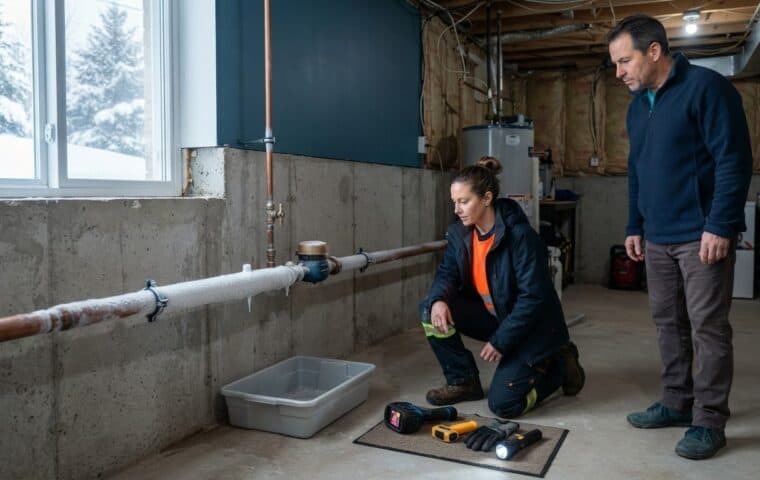
Note the first area affected: beneath a sink, beside a water heater, near the indoor main shutoff, along a foundation wall, in the yard or on the roadway. Also note whether water is coming from a visible pipe or rising through a drain. The latter may involve drainage rather than the drinking-water supply.
If you were able to close an indoor valve safely, observe whether water still appears. Note whether other fixtures or units have also lost flow. Closing a valve may stop some of the water, but the result does not locate the break by itself. Water already trapped in a cavity can continue to move, and another source may be feeding the wet area. Soaked ground near the street does not prove that the municipal system is responsible.
Do not decide that the entire service line needs replacement based on a puddle or pressure change. Water Service Line: Leak or Simply Low Pressure? examines the checks to consider before planning underground work. If the leak is on a visible copper pipe, Copper Pipe Leak: What Is Causing It? discusses the pipe and its fittings.
When should you contact the City or a plumber?
Contact a plumber when an active leak appears to come from the building’s pipework or fittings, the indoor shutoff does not control it, or water continues to spread. Describe what you can see; an on-site assessment can determine whether an indoor pipe, the water service line or another source is involved. Water leak repair inside a building and a possible water service line replacement address different findings.
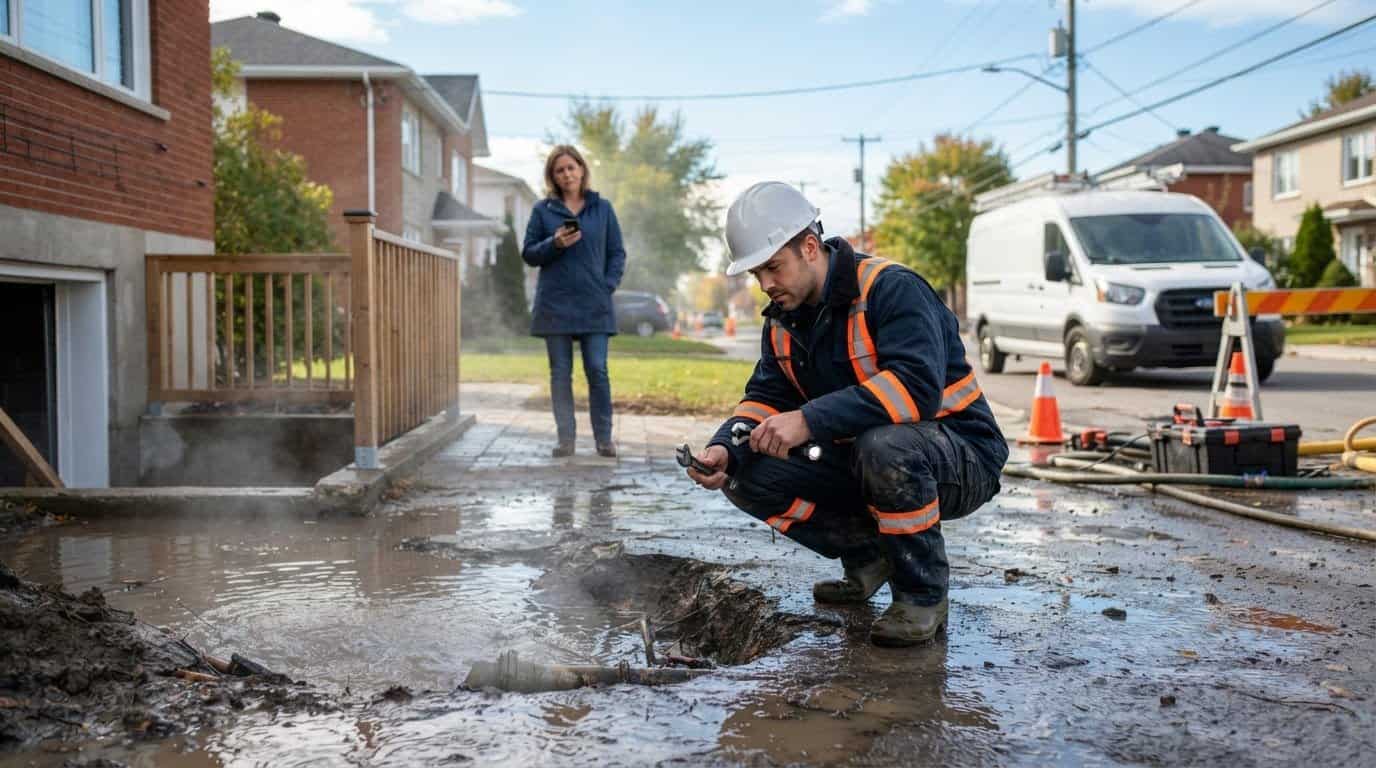
Report the situation to the City if water is surfacing or collecting on the road, near public infrastructure, or if the local water supply appears to have changed. In Laval, the City’s contact page lists 311, or 450-978-8000 when calling from outside Laval. Where water becomes visible does not, by itself, settle the location of the break or responsibility for the repair.
A water main break or municipal work may lead to a service interruption or a water-quality notice for particular addresses. Check Laval’s drinking water advisories and follow any notice that applies to your address. A suspected break does not automatically mean there is a boil-water advisory. If you have doubts about the water’s colour, smell or taste, the Gouvernement du Québec advises contacting the municipality before drinking it.
What information should you prepare for the next step?
From a safe location, record the address, when you first noticed the problem, the affected area, the visible rate of flow, whether the puddle is growing, any pressure changes and which valves you safely closed. In a duplex, apartment building or condominium, say whether multiple units are affected. Notify the building manager, owner or condominium corporation promptly so access and any water shutoff can be coordinated.
Take a few photos if you can do so without entering a hazardous area. If belongings or building materials have been damaged, Infoinsurance advises contacting your insurer promptly, preventing further damage and keeping records. Coverage depends on the policy and the established cause; do not assume a particular loss is automatically covered.
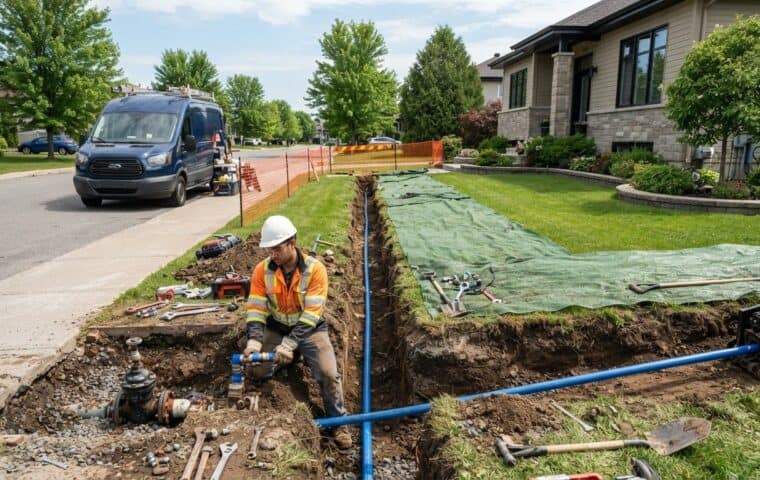
An underground repair may require permits, coordination of a water shutoff and utility locates. Plan those steps after the problem has been assessed, rather than digging where the break is suspected. Info-Excavation explains how to request an underground utility locate before excavation.
Frequently asked questions
Does low water pressure prove that a pipe is broken?
No. A drop affecting several taps deserves investigation, especially alongside a visible leak, but it can have other causes. Note which fixtures are affected and check relevant municipal notices without opening the plumbing to search for a defect.
Water is surfacing near the street. Should I call only the City?
Report water on the roadway or near public equipment to the municipality. If the building also has an active leak, have its plumbing assessed. Water near the street alone cannot establish which part of the system failed.
What if I cannot reach the indoor shutoff valve?
Do not cross flooded ground or an area with an electrical hazard to reach it. Keep people clear and describe the situation to a plumber. If an outdoor shutoff is needed in Laval, ask the City about the applicable procedure.
Why is water still appearing after I close the indoor valve?
Water already collected inside a wall cavity or beneath a floor may continue to emerge. There may also be another source. Continued moisture calls for an assessment; it does not prove that the break is on the municipal side.
Should I boil my water after a suspected break?
Do not assume an advisory applies to the entire area. Check Laval’s official notices for your address and follow the instructions in any notice that applies. If the water has an unusual colour, smell or taste, ask the City before drinking it.
Can I dig to find the pipe?
No. Surface water can be misleading, and other utilities may be buried nearby. Have the cause and required procedures established first. If excavation is planned, arrange to identify underground infrastructure before digging.
In summary: protect people, record the signs, arrange an assessment
If you suspect a water line break, keep people safe, close only an indoor valve you can reach without risk and record what is happening. An active leak needs prompt assessment. Low pressure or wet ground on its own cannot determine the repair. Depending on the location and hazards, contact a plumber, the City or Hydro-Québec, and let the findings guide the work.