A sewer backup that returns after cleaning raises an expensive question: does the sewer line need to be replaced? The symptom alone cannot answer it. The defect must be located, the inspected portion identified, and the reason for the proposed length of replacement explained.
In Laval, municipal requirements also need to be checked before excavation. This guide explains what to ask about the diagnosis, the proposed work and the steps that follow.
Key takeaways
- Recurring backups, sewer odours or wet ground warrant investigation. None proves that the entire line needs replacement.
- A camera shows the inside of the section it can travel through. The report should identify sections that could not be examined.
- A localized repair or a longer replacement depends on where the defects are and the condition of the pipe that would remain.
- Before approving work, ask for the affected section, access points, disturbed surfaces and responsibilities in writing.
- In Laval, confirm the applicable permit. If a plumber determines that the City must intervene, follow its 311 procedure.
- An Info-Excavation request covers its members’ networks; other buried infrastructure may require separate checks.
Table of contents
- What the symptoms cannot tell you
- What a diagnosis should document
- How to decide how much pipe to replace
- What the written scope of work should include
- What to confirm before excavation
- What to check before the trench is closed
- Frequently asked questions
- Make the decision based on documented conditions
What the symptoms cannot tell you
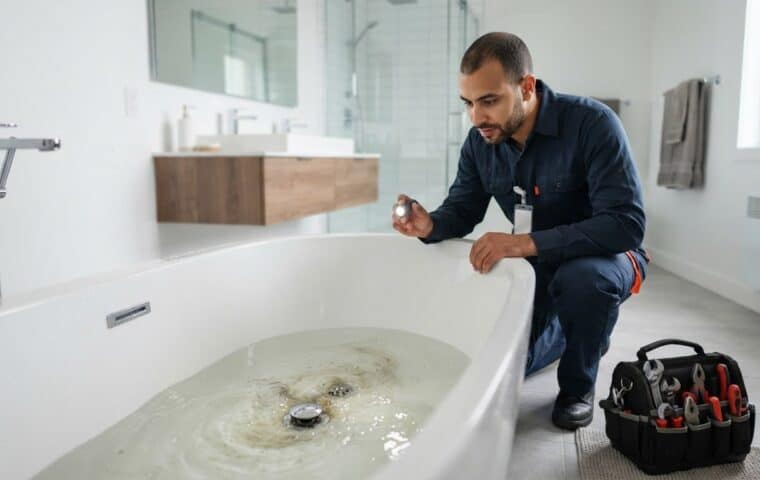
Several fixtures draining slowly at once, wastewater rising at the lowest drain, or a blockage returning soon after cleaning may point toward a shared line. Those signs cannot, by themselves, distinguish a stubborn obstruction from an offset joint, a sagging section or another pipe defect.
Wet ground deserves the same caution. The moisture could come from a sewer line, but it could also have another source. Water appearing in a basement after heavy rain does not automatically mean the sanitary sewer connection is broken; foundation drainage and infiltration must be considered separately.
Even visible tree roots do not always call for a complete replacement. Their location, the number of entry points and the pipe’s overall condition matter more than one image. Our guide to roots returning after sewer cleaning explains why.
If wastewater is actively entering the building, stop using fixtures that discharge into the affected drainage system and avoid contact with contaminated water. The City of Laval’s sewer backup guidance explains the first steps when the source and responsibility are still uncertain.
What a diagnosis should document
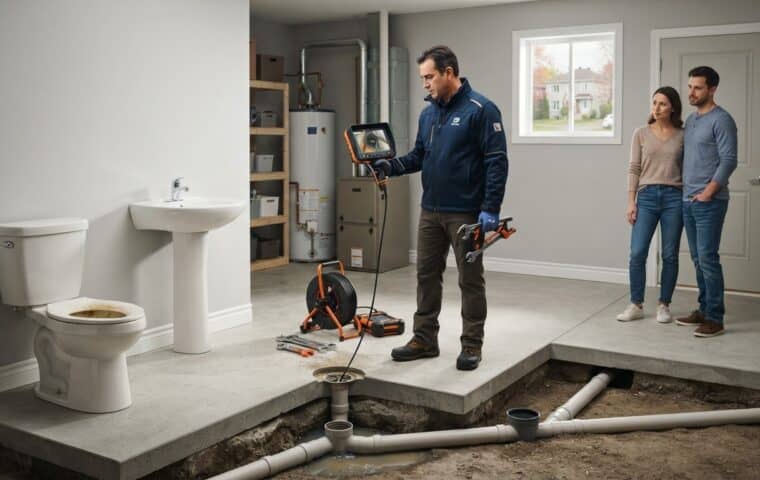
A drain camera inspection can reveal an obstruction, roots, a crack, an offset connection or a deformed section in the accessible pipe. Before that footage supports a replacement decision, ask how the observed defect relates to what is happening inside the building.
The most useful details are:
- Where the camera entered and which pipe was inspected: the sanitary sewer, another drain or a foundation drain.
- The recorded distance and estimated location of each defect, including how a proposed excavation point will be marked at the surface.
- The length actually inspected: did the camera reach the intended connection, or was it stopped by a blockage, bend or collapse?
- The condition of nearby sections: does the problem appear isolated, or are other defects visible?
- The limits of the footage: deposits, cloudy water and restricted access can conceal parts of the pipe.
A cable-length reading does not necessarily give the defect’s straight-line distance from the house. The camera also cannot directly show the soil around the pipe. If its route or depth remains uncertain, ask what further checks will guide the excavation.
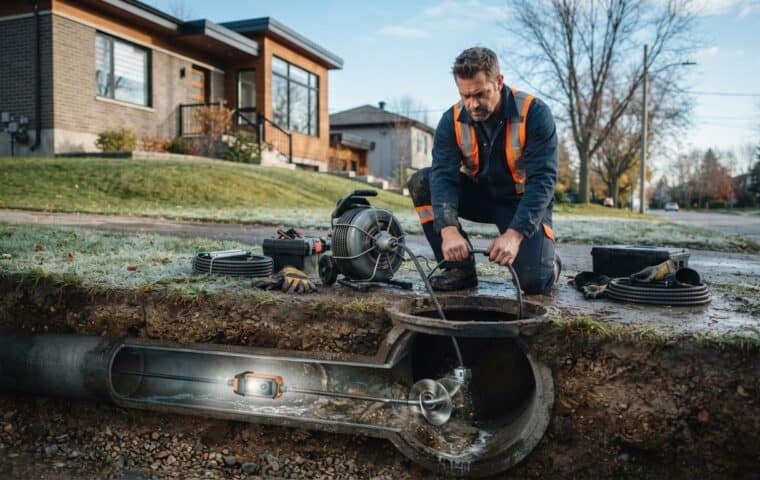
Sometimes a line must be cleared before useful footage can be recorded. An inspection stopped at a complete blockage cannot establish the condition of the pipe beyond it.
How to decide how much pipe to replace
A targeted repair may be reasonable when one defect is clearly located and the adjoining pipe appears sound enough to remain. Several defects along the route, major deformation or poor alignment may instead justify evaluating a longer replacement.
Ask the contractor to answer two questions: What will the proposed section correct, and what condition will the remaining pipe be in? A small excavation may offer little value if it leaves another failing section immediately beside it. A recommendation to replace the entire line also needs an explanation of the defects and the inspection’s limits.
Access, connections and conditions revealed once the pipe is exposed can affect the final decision. The sewer line repair and excavation service page describes the possible work; the scope for your property should be tied to its documented findings.
What the written scope of work should include
Before authorizing excavation, have the section to be replaced identified in writing. A description such as “replace the sewer” leaves too much open to interpretation. Ask the proposal to specify:
- the planned starting and ending points;
- what the inspection confirmed and what can only be checked after excavation;
- the proposed pipe materials and connections to any section being kept;
- which surfaces will be opened, protected and restored;
- who will coordinate the permit, utility locates and any applicable inspection;
- when toilets, laundry equipment and other fixtures cannot be used;
- how unexpected conditions and additional work will be presented for approval.
The last point matters before the crew arrives. If excavation reveals more damage than the camera could show, ask how the revised scope will be explained and approved before extra work proceeds.
What to confirm before excavation
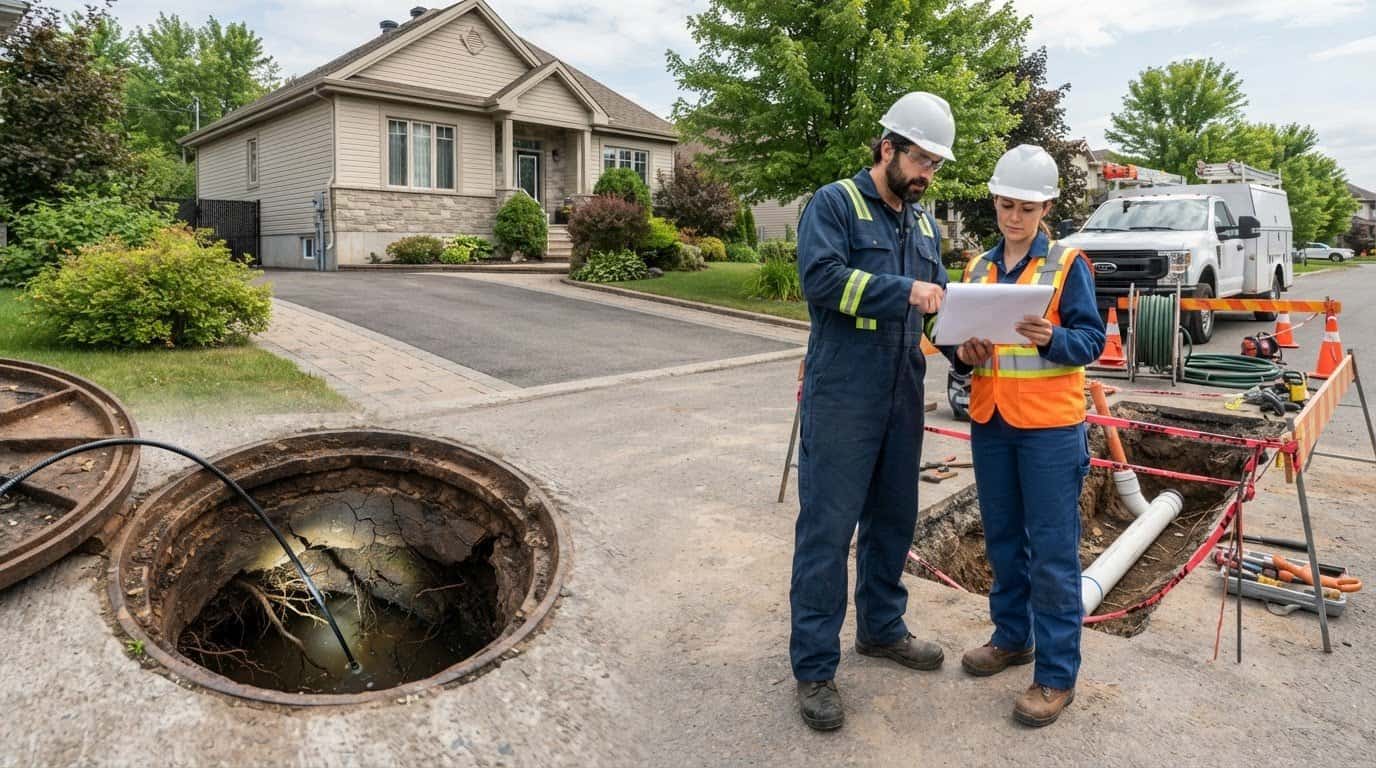
The City of Laval states that a permit is required for work affecting water and sewer service connections on private property. Its service connection permit instructions are available in French. Confirm the permit and documents needed for the specific address and proposed work before setting a start date.
The defect must also be located in relation to the private service connection and the public network. Neither a backup nor the camera’s distance reading settles responsibility on its own. Under the City’s English sewer backup procedure, if the plumber determines that the City must take action, contact 311 and retain the plumber’s detailed invoice. That does not mean the City automatically pays for private work or resulting damage.
Before digging, an Info-Excavation locate request provides information from underground network owners that belong to the service. Info-Excavation notes that not every network owner is a member. Ask the excavation contractor how any other infrastructure in the work area will be identified.
Check the qualifications of the companies responsible for each part of the job. The RBQ explains how to verify a contractor’s licence and subclasses. You can also check the plumbing contractor in the CMMTQ member directory, which is available in French.
What to check before the trench is closed
Once the pipe is exposed, the original diagnosis may be confirmed or refined. You do not need to inspect the installation yourself, but you can ask what the qualified crew will verify before the pipe is covered:
- The actual scope: does the exposed defect match the location and section originally proposed?
- The new section: have the connections, pipe support and route been checked?
- Drainage: what checks will be completed before fixtures are put back into use?
- Municipal requirements: does an inspection or another permit condition apply before backfilling?
- Documentation: will you receive photos of the exposed and installed pipe and a description of the section replaced?
Keep the original inspection report, footage if supplied, permit, approved changes, photographs and detailed invoice. They can help explain the work if a problem returns, the property is sold or an insurer requests information.
Frequently asked questions
Does one crack on camera justify replacing the entire line?
No. Its location and extent, the condition of neighbouring sections and the inspection’s limitations all matter. An isolated crack and several deteriorated sections do not necessarily call for the same work.
Can a camera prove that the entire sewer line is sound?
It provides information about the portion it can reach and see clearly. A blockage, deposits or cloudy water may prevent examination of other sections. It cannot directly show the outside of the pipe or all surrounding soil conditions.
Can one section be repaired instead of replacing the whole line?
Sometimes. A limited repair depends on the pipe that will remain, the defect’s location and whether suitable connections can be made. Ask why the proposed length addresses the documented problem.
Can I use the toilets during replacement?
Not throughout the job. When the sewer line is open or disconnected, fixtures that discharge into it may have to remain unused. Confirm the expected interruption beforehand and wait for the crew’s approval before using them again.
What if the defect appears to be on the public side?
Have its location documented and follow the applicable municipal process. In Laval, call 311 if the plumber’s assessment indicates that the City must intervene. Do not assume that excavation on the public portion has been authorized or that costs will be shared.
Will home insurance pay to replace the pipe?
That depends on the policy, the cause and the coverage purchased. Coverage for damage caused by a sewer backup does not, by itself, establish whether replacing the pipe is covered. Infoinsurance explains the additional coverage available for sewer backup damage. Report any loss promptly and ask your insurer which records to preserve before work begins.
Make the decision based on documented conditions
A clearly defined replacement starts with a documented defect, a located section and an explanation of the pipe that will remain. Before excavation, confirm the written scope, municipal steps, underground utility information and how the completed work will be checked and recorded.