If you suspect a blocked main sewer line, start by stopping wastewater discharge and preparing for professional help without opening the plumbing. Problems affecting several fixtures or water rising in the basement warrant an assessment, but those symptoms do not locate the blockage or establish its cause.
While you wait, practical steps can help prepare the visit: notify occupants, prevent scheduled appliance discharge, make known access points available and report any drain chemicals already used. Start with the information you have. Preparation should never delay a request for help when water is rising.
Key takeaways
- If several fixtures react or wastewater backs up, stop activities that add water to the affected drainage system.
- A washing machine or dishwasher may discharge water even when nobody turns on a faucet.
- Preparing access means clearing a safe, dry route and identifying known openings, without removing a cap or fixture.
- Tell the plumber about chemical drain cleaners and mechanical attempts before anyone opens the line.
- In a multi-unit building, designate someone to coordinate instructions and access to common areas.
- Water draining away temporarily does not confirm that every fixture and appliance can safely be used again.
Table of contents
- Recognizing when to prepare for a plumber
- Organizing a pause in wastewater discharge
- Preparing access without opening the line
- Reporting chemicals and previous clearing attempts
- Gathering useful information for the visit
- Coordinating the response and restarting water use
- Frequently asked questions
- Keeping priorities clear before the plumber arrives
Recognizing when to prepare for a plumber
Abnormal drainage in several rooms can suggest a restriction in a shared pipe. It does not prove that the entire main sewer line is blocked. A group of fixtures may share a separate branch, and some symptoms can also involve the drainage system’s venting.
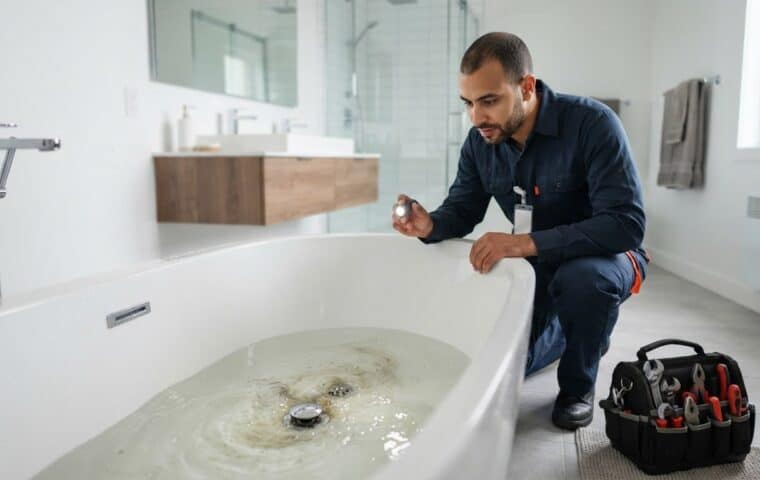
The practical concern is a change in what the plumbing can handle: several fixtures become unusable, a water level starts rising or wastewater emerges indoors. At that point, do not add more water to confirm the problem. Describe what is happening and arrange an assessment.
For a closer look at the symptoms themselves, see the guides to a gurgling drain and reliable signs of a sewer backup. This article focuses on what you can organize before the plumber arrives.
Preparation remains useful if the line eventually drains. Report that improvement to the person handling your request rather than cancelling the assessment solely because the visible water has disappeared.
Organizing a pause in wastewater discharge
Give everyone a clear instruction
“Do not use the basement toilet” may be too narrow if a shared line is involved. Other toilets, showers and sinks may send wastewater into the same pipe. When several fixtures react or a backup is active, stop discharging into the affected system while awaiting professional instructions.
Notify people who are home and anyone who may return before the visit. In a house, a note beside the fixtures can reinforce the verbal instruction. In a multi-unit building, contact the owner or property manager so they can coordinate instructions for potentially affected units. Do not assume everyone heard the first phone call.
If you do not know which fixtures share a line, say so. Ask what use should be suspended rather than declaring a bathroom independent without a plan or an assessment. A fixture that looks separate may still connect farther downstream.
Account for scheduled appliances
Automatic cycles deserve particular attention. A delayed laundry cycle may begin after you call; a dishwasher already running may still need to drain. Mention any other known equipment that periodically discharges water, such as a water softener scheduled to regenerate.
For an appliance accessible from a dry, safe location, check its controls and manual before selecting a function. Depending on the model, pressing “cancel” may trigger draining. Avoid pressing buttons at random to stop a cycle. Ask for guidance if you do not know what the appliance will do.
Do not unplug a wet appliance or touch an outlet near standing water. Suspending water use does not justify handling unsafe electrical equipment. Tell the plumber if an appliance cannot be reached or controlled safely.
Plan for essential needs during the wait
If no toilet can be used, explain that limitation during the initial call. It matters particularly when someone has reduced mobility or needs frequent access to a washroom. If possible, arrange temporary access to facilities elsewhere rather than assuming that a toilet which still appears functional is safe to use.
Do not empty cleaning buckets into another sink. Moving the discharge point may not change where that water ultimately goes. Avoid filling a bathtub that would later need to be drained while the wastewater route remains uncertain.
The aim is to manage the pause consistently. One person stopping water use downstairs will not prevent additional discharge if another occupant starts a shower upstairs without knowing about the problem.
Preparing access without opening the line
Identify what is known and what remains concealed
If a cleanout or access hatch has already been identified, tell the plumber where it is. A wide photograph taken from a safe position can show the room, access point and surrounding obstacles. You do not need to open anything to make that information useful.
If you do not know where the cleanout is, do not begin lifting every cover. Some openings may provide access to a backwater valve, sump or another component. Similar-looking covers do not establish what lies beneath them. Explain which access points are visible and which are only mentioned in older records.
Do not unscrew a cap to “get things ready.” If wastewater is being held in the line, opening it can release that liquid. The professional needs to choose the appropriate entry point and determine how to approach it safely.
Clear a practical, dry route
Where the building remains dry and safe, remove small objects obstructing the stairs or route to the affected room. Keep an exit clear. Have keys available and identify the entrance to use, especially if the basement has a separate door.
Mention a heavy cabinet covering a hatch, fixed shelving or an opening behind the washing machine. Do not move a connected appliance on your own to anticipate the plumber’s choice of access. Pulling on its hoses or connections could create another plumbing problem.
In a finished basement, explain whether a known pipe runs beneath flooring or whether renovations concealed an older access point. Do not remove flooring or cut a wall before discussing whether an opening is necessary and where it should be made.
The useful preparation is an accurate description of the available route. It does not require exposing the entire drainage system before the visit.
Stop preparing if access is unsafe
A cleanout surrounded by water is not safely accessible simply because the situation is urgent. Tell the plumber the route is compromised and stay out of the affected area. Keep children and pets away from wastewater and any potentially unsafe route.
Hydro-Québec’s water-damage and flooding guidance explains when power can be shut off safely. Do not handle the electrical panel if the floor or your body is wet, or approach it when water is nearby. If you cannot shut off power safely, leave the hazardous area and contact Hydro-Québec. Call 911 if there is immediate danger or you cannot leave without contacting water or energized equipment. Hydro-Québec
Reporting chemicals and previous clearing attempts
Have drain-cleaner information ready
If a product was poured into a drain, record its name, the fixture involved, the approximate time and the estimated quantity if known. A photograph of the label or the original container may help. Do not enter an unsafe area to retrieve it.
Health Canada advises never mixing household chemical products and following their labels. Do not add another drain opener, bleach or a homemade mixture to “neutralize” what is already in the line. If several products were used, identify all of them before the plumber handles the plumbing. Canada.ca
This information matters even if the first product appears to have left the sink or tub. Its absence from the visible basin does not establish what remains farther along the pipe. If you cannot remember the quantity, say that it is unknown rather than supplying a precise figure.
Describe tools already used without continuing the attempt
Mention any plunging, cable insertion or component removal. Explain whether something remains open, a tool is stuck or a leak appeared after the attempt. Do not force a cable simply so you can report that it has been removed.
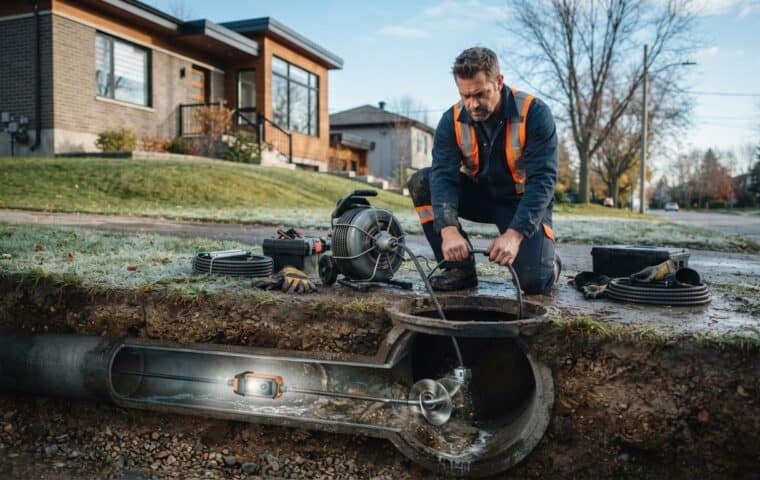
For an exterior sewer connection, the hazards extend beyond contact with wastewater. The CMMTQ’s sewer-unblocking safety guidance, available in French, explains the checks associated with a possible gas line crossing through a sewer. It advises against clearing that connection yourself. Access to rental equipment does not replace these safety checks. cmmtq.org
Be straightforward about attempts that seemed unsuccessful. They may still have changed the condition of an opening or left equipment or chemicals in the system.
Gathering useful information for the visit
Prioritize access constraints
During the first call, provide the full address, unit or floor, and explain what currently prevents normal plumbing use. Then describe how to enter the building and who will meet the plumber.
Useful practical details include a locked door, narrow stairs, a shared mechanical room or the need to reach a superintendent. Separate confirmed restrictions from assumptions. “The mechanical room is locked and the superintendent has the key” is more useful than “someone should be able to open it.”
Mention if reaching the relevant area requires going through a neighbouring unit. The plumber cannot assume that door will be available on arrival. The property manager can arrange whatever access is needed for the situation.
If access arrangements change after the booking, pass that information along. A person with keys leaving the building can affect the visit even when the plumbing symptoms remain unchanged.
Find records that are already available
Keep an earlier drain-clearing invoice, plumbing plan or inspection video nearby if you have one. An invoice may identify the access point previously used and the section worked on. A plan may show an intended route without confirming that it still matches the installation after renovations.
Present records with their date and context. An observation made years ago is not a diagnosis of the current incident. Likewise, a past repair to one section does not describe the condition of the entire drainage system.
Do not wait until you have assembled a complete file before requesting help. Documents can be forwarded later, after occupants have been notified and the immediate problem reported. Tell the professional what records exist even if they cannot be opened or located right away.
Prepare a short handover note
If one person makes the call and another meets the plumber, prepare a shared summary. Include which uses have been suspended, which products were reported, what access is available and how to contact the person coordinating the visit.
Add changes since the original call: an automatic appliance completed its drain cycle, the route became inaccessible or the water level continues rising. Those developments may require updated instructions; they should not wait for someone to read a file on arrival.
Do not have each occupant repeat a plumbing test to complete the handover. Useful information is what is already known, gathered without sending additional water into the affected system.
A short, current summary is easier to use than several messages containing different assumptions about what has been stopped or opened.
Coordinating the response and restarting water use
Identify someone to follow the visit
In a rental building or condominium, identify who can open the necessary areas and receive explanations. Notify the owner, property manager or condominium board when shared pipes or common access may be involved. Do not wait until you have personally settled which components belong to whom.
The person on site should know whom to contact if another access point is needed. If they cannot approve additional work, have the appropriate person’s contact details available. Being present to open a door should not be confused with having unlimited authority to modify the installation.
For work on the drainage system, the drain cleaning and unclogging page describes the service. The method and entry point depend on the assessment at the property.
Follow the municipal procedure when applicable
In Laval, the City’s sewer-backup procedure starts with an assessment by an RBQ-licensed plumber who is a CMMTQ member. If the plumber determines that City action is required, the procedure directs you to contact 311.
Keep the detailed invoice and any information provided about the affected section. When contacting the City, explain that a plumbing assessment has already taken place and provide the available findings. Do not turn a tentative suggestion into a confirmed conclusion about public responsibility. Ville de Laval
This process does not guarantee reimbursement or determine in advance who will pay. The actual findings and applicable conditions must be considered for the individual file.
Obtain clear instructions before restarting everything
Before resuming use, ask which fixtures and appliances may operate and whether any restrictions remain. Give the same instructions to the other occupants. Starting the washer, dishwasher and showers together should not become your own test of the repair.
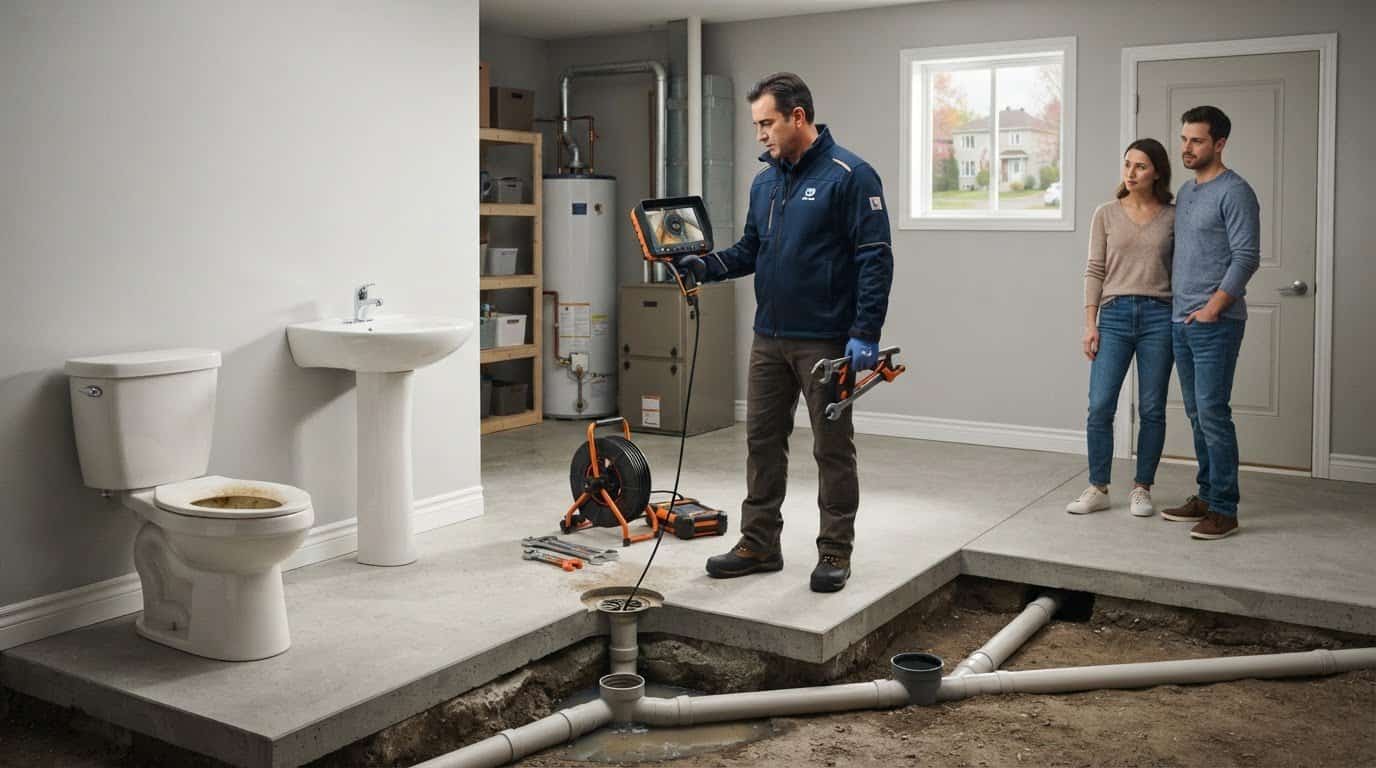
If another assessment is recommended, ask what question it is meant to answer and when it should take place. The drain camera inspection page explains the possibilities and limitations of that examination.
Finally, distinguish permission to use the plumbing from permission to use a room affected by wastewater. Restored drainage does not establish that contaminated surfaces or wet electrical equipment are ready for normal use. Keep any remaining access or safety restrictions clear to everyone in the building.
Frequently asked questions
Should I drain an already-filled bathtub before the visit?
Not on your own initiative when a shared line may be blocked. Tell the plumber that water remains in the tub and wait for instructions. Draining it to improve access would add volume to a system whose capacity is uncertain. Do not carry the water to another fixture assumed to have a separate drainage route.
Should I remove the toilet to make clearing easier?
No. Removing a toilet is work on the installation, not routine access preparation. The plumber will determine whether removal is necessary. You can instead move dry, lightweight objects away from the fixture and describe the room’s constraints. Leave the connections and mounting hardware in place.
Can I run the dishwasher’s drain function before the plumber arrives?
Avoid starting a drain cycle to empty the appliance. It would send water into the affected system. Report its condition and consult the model’s instructions to understand its controls, without handling its connections. If it is already running, ask how to manage the situation based on the cycle and whether it can be reached safely.
Do I need to clean the whole basement so the plumber can work?
Do not delay the call to start cleaning. Describe the contamination and obstacles. Access needs to be assessed with wastewater and electrical hazards in mind. You can prepare an existing dry route, but should not cross standing water or handle contaminated belongings to create a work area yourself.
What if I need to leave before the visit?
Notify the person arranging the response. Confirm who will open the building, how occupants will receive instructions and who will remain reachable. Explain if nobody can be there. Prevent scheduled appliances from starting, where that can be done safely, and do not treat a temporary improvement as confirmation that normal unattended use can resume.
Should I report an earlier attempt if it did not seem to work?
Yes. An unsuccessful attempt may still have left chemicals, a removed component or a cable in the system. Explain what was done, where and when, without minimizing the steps or trying to reverse them before the visit. That information helps the plumber approach the installation as it actually stands.
Keeping priorities clear before the plumber arrives
When a main sewer line may be blocked, your main tasks are to prevent further discharge, coordinate occupants and make known access points available safely. Existing records and information about previous attempts complete that preparation. Diagnosis, opening the line and deciding when normal use can resume should follow an assessment at the property.