A persistent odour does not automatically tell you whether to book a smoke test or a camera inspection. Start by identifying the question: are you looking for a possible gas escape route or a visible problem inside a pipe? Smoke testing helps investigate certain leakage paths; a camera provides images of the pipe section it actually travels through. The choice should follow the hypothesis being checked, rather than whichever piece of equipment happens to be available.
This guide explains the discussion to have with a professional when preliminary checks have not explained the odour. It is neither a home testing procedure nor another list of every possible cause. If the smell remains limited to a bathroom sink that drains normally, our guide to a bathroom sink that smells bad covers that first stage.
Key takeaways
- Ask which hypothesis the inspection should support or rule out before choosing a method.
- Interior footage and a smoke escape point are different observations; neither automatically describes the entire plumbing system.
- A result showing no problem means little if the relevant section was not examined under useful conditions.
- Confirm the test scope, access limitations, expected findings and the decision that follows.
- An odour investigation should never delay protecting occupants when a hazard or sewer backup is present.
Define the question before booking a test
“Find the smell” is an understandable goal, but it is too broad to define an inspection by itself. A more useful request separates the experience from the technical question. For example: “The odour keeps returning to this room, and the initial checks did not identify a source. Are we now investigating a possible connection to the drainage system?” This wording leaves the professional free to choose how to examine that possibility.
In another situation, a visual pipe inspection may be proposed because unusual drainage accompanies the odour. The question then becomes: “Is there a visible problem in the section being considered that could justify further work?” This does not assume that a defect will be found or that it will explain the entire odour problem. It identifies what the footage can contribute to the decision.
Separate the fact, the hypothesis and the action
Three short lines can make the conversation clearer:
- Observed fact: the odour has returned despite an earlier intervention, or unusual drainage occurs alongside it.
- Hypothesis to check: a possible gas escape route, a pipe section requiring inspection or another source that remains uncertain.
- Proposed action: a specific examination with an explained scope and a next step that depends on the findings.
Avoid turning the first line into a diagnosis. “It smells, so it needs a camera” jumps straight from a symptom to a tool. Conversely, the professional may recommend a different check after seeing the property. Ask what information is missing and how that alternative will provide it.
You do not need technical vocabulary to ask these questions. The aim is to understand why a test is relevant at this stage, rather than insist on particular equipment or seek certainty that cannot reasonably be provided by telephone. A clear question also gives you something concrete to return to when the inspection is finished.
Understand the evidence each method provides
An examination is useful when it produces an observation suited to the question. Separate the evidence being sought from the conclusion you hope to reach.
Smoke testing investigates a possible pathway
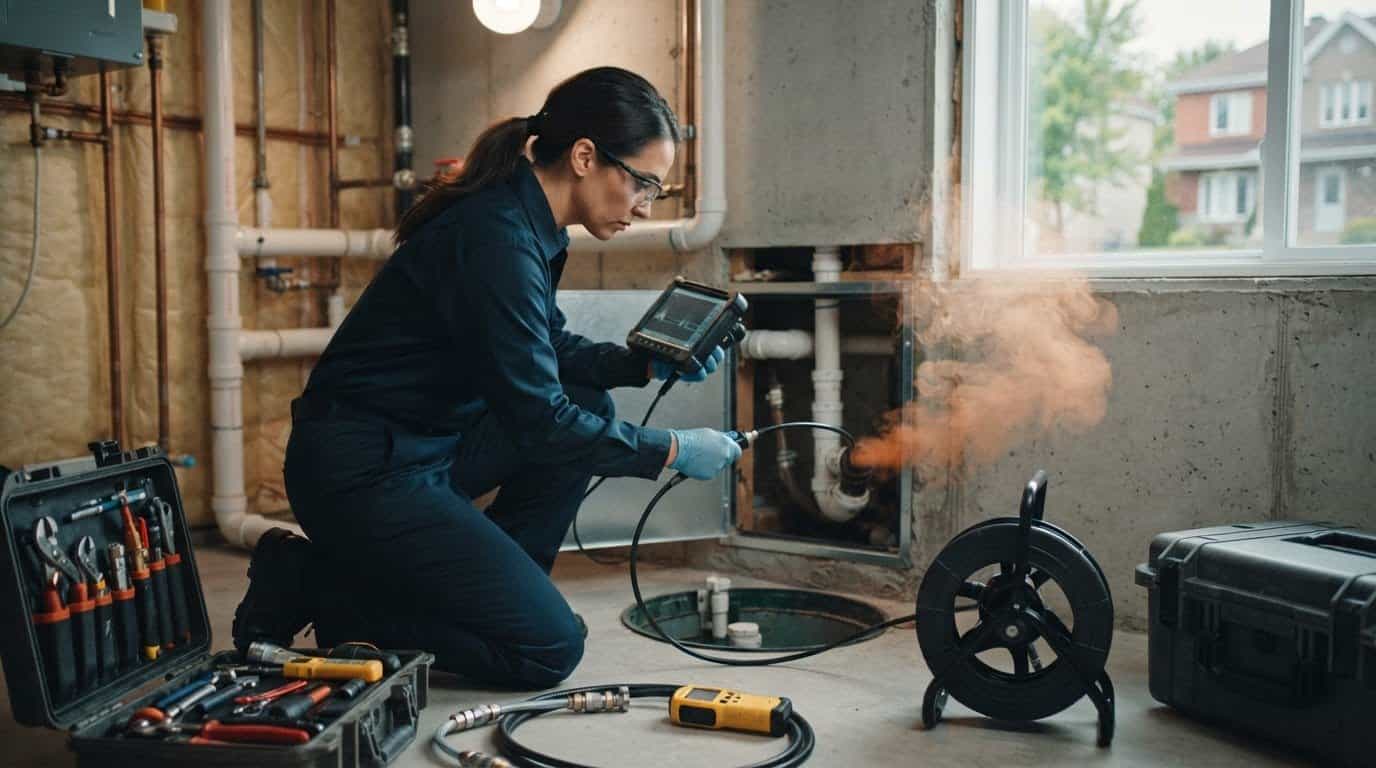
During a professional test, smoke intended for that application is introduced into a section of the system. An unexpected escape point can identify an opening requiring investigation. Manufacturer Superior Signal describes plumbing smoke testing, including its use in finding certain leaks and faulty connections. This explains an application of the method; it does not establish that a particular building needs the test.
For a property owner, the useful question is whether the observed smoke relates to the suspected pathway. An expected outlet identified in the test procedure means something different from an unexpected indoor escape point. The person conducting the test should explain that distinction. Do not assume that every visible plume confirms a broken pipe.
Preparation, the smoke product and safe testing conditions are the professional’s responsibility. Do not try to reproduce the process with improvised smoke, a vaping device, a flame or a chemical poured into a drain. An improvised demonstration does not produce an equivalent result, even if something visible emerges from an opening.
A camera records a visible route
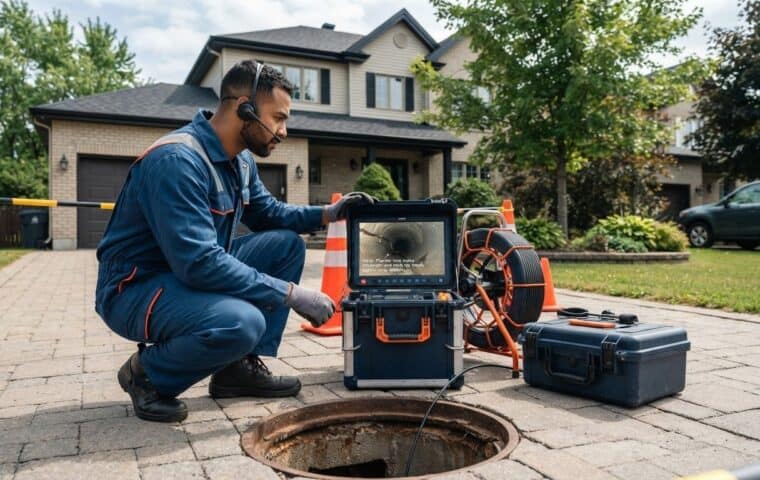
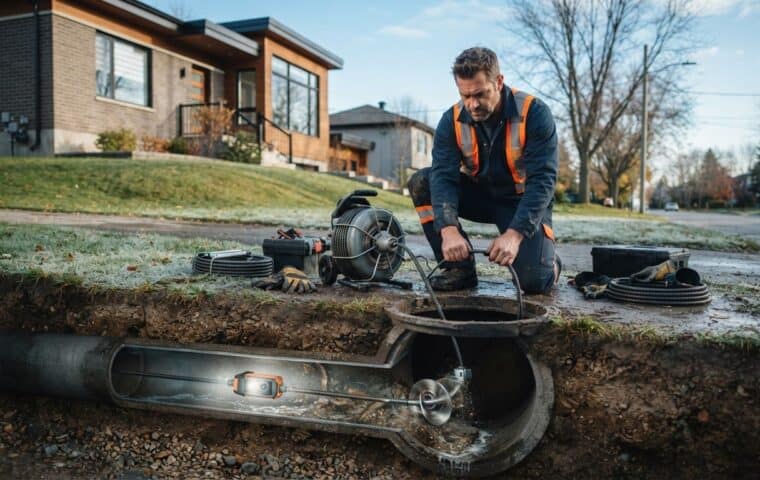
A camera obtains an interior view. RIDGID’s drain and sewer video inspection systems combine cameras, monitors and recording equipment to view and share footage. Having a video does not, however, make the inspection a universal test of whether the plumbing system is gas-tight.
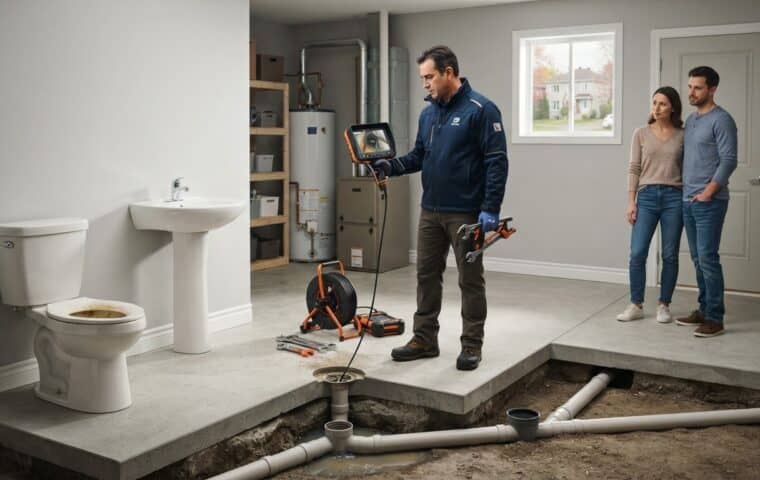
Ask which line will be inspected and why that line matters to the odour investigation. Footage of the main drain does not, simply because it is called the main drain, show every connection inside the building. Our drain camera inspection page explains the service and its access constraints. Here, the important issue is what this evidence contributes to a smell that has not yet been explained.
The methods may complement each other when two different questions remain open. That does not mean they should automatically be ordered together. A second examination should provide information that the first method could not supply, with a clear explanation of how that information will affect the next decision.
Interpret positive and inconclusive results
“Positive” can be confusing: it generally means that a sign being sought was observed, rather than that the complete explanation has been established. Ask for one sentence connecting the finding to the original question and another describing its limitations. This keeps an encouraging finding from becoming an unsupported promise.
A smoke escape point is not yet a repair plan
In a fictional example, smoke appears near a wall penetration. The finding to record is where it appeared and which section of the system was tested. Before deciding that the pipe immediately behind that spot must be replaced, ask how the origin will be confirmed and what work is being proposed.
This example illustrates the difference between locating a clue and authorizing repairs. A photograph with a description can help preserve that distinction. It does not replace the professional’s interpretation or any further checks they consider necessary. It is particularly useful to keep the original wording when passing the finding to another person.
“Nothing found” needs a defined scope
For a camera inspection, ask whether the relevant section was actually travelled and whether conditions allowed the question to be answered. For smoke testing, ask which part of the system was included and what conditions could limit interpretation. A partial examination does not become complete merely because no defect was recorded.
Consider three different statements: “No abnormality was observed in the section examined”; “The section of interest could not be examined”; and “The inspection did not explain the odour.” They support different decisions. The first provides limited but useful information. The second mainly describes a limitation. The third leaves the original question unresolved.
Reassuring findings do not replace safety
The strength of a smell does not measure gas concentration. CCOHS explains the hazards of hydrogen sulfide, including the limitations of smell as a warning. This does not mean every household odour comes from that gas or reaches a hazardous concentration. If a strong unexplained smell is accompanied by feeling unwell, leave the area and seek help from a safe location. Never enter a manhole or confined space to continue investigating.
Compare proposals rather than equipment alone
Two proposals may use the same name while covering different needs. One may target a specific section of pipe; another may first investigate which section should be examined. To compare them, clarify what will be done and what will count as completion of that stage.
Useful questions include:
- What question is this examination intended to resolve in my situation?
- Which parts of the installation are included, and which are excluded?
- What happens if access or site conditions prevent the proposed test?
- Will I receive an explanation of the findings, images or another agreed document?
- Does the proposal cover the examination alone, or a separate intervention as well?
- What decision will be proposed if the findings do not answer the question?
These questions compare scope; they are not a request for a complete remote diagnosis. The contractor may need to see the property before confirming a method. They may also need to revise the scope when an unexpected condition is discovered. Ask for the change to be explained before authorizing additional work.
Above all, avoid equating more equipment with a better diagnosis. Three poorly targeted tests can leave the same question unanswered. One well-explained step that rules out a specific hypothesis can make the next stage simpler. The criterion is the information gained and its usefulness, rather than the number of tools used or the length of the equipment list.
Coordinate an investigation in a shared building
In a plex or condominium, several people may describe the same episode differently. One reports an odour in the unit, another a smell near the hallway, and a third a drain problem. Before arranging several independent visits, the person responsible can combine the reports and request an examination with a clearly defined area of investigation.
This does not establish in advance whether the source is private or shared. It organizes authorized access and communicates useful facts. Leave interpretation of the plumbing system to the professional, and application of condominium documents or contractual responsibilities to the appropriate person. An organized request can help without pretending to settle either issue.
Plan access and communication
If a test is selected, ask who needs to be informed, which spaces must be accessible and what instructions apply to occupants. Mention known sensitivities or occupancy constraints before the visit so the professional can confirm suitable preparation. Do not give a blanket assurance that every product is harmless for every person.
A municipal test and an investigation inside a building are different activities. A notice about work in the street does not establish that the private installation has been examined or that the municipality has identified the source of an indoor odour. Check the specific notice and its boundaries before drawing a conclusion.
In Laval, municipal information about water accumulation, infiltration and sewer backflows addresses another important situation: water entering or accumulating and the possible involvement of the public system. A municipal report and a building inspection may be needed for different reasons. An odour alone does not automatically establish that the City is responsible.
Use the findings to choose a proportionate next step
At the end of the examination, return to the question recorded at the beginning. Has it received an answer, even a partial one? If a suspected escape route was located, ask how it will be confirmed and corrected. If footage shows a pipe abnormality, ask what connection has been established with the odour. If the outcome is inconclusive, clarify which hypothesis remains open.
A short note separating observed, not examined and still to check is useful. It prevents the next person from treating an assumption as an established fact. Attach the documents actually received. Do not turn a cautious verbal explanation into a categorical claim when writing an email or discussing the issue with a building manager.
After a correction, agree on how the result will be assessed during normal use. An intermittent smell may be absent during the visit. Its immediate absence therefore does not always establish that it can never return. Conversely, its return does not automatically show that the completed repair was worthless: it calls for reviewing the problem in light of the new facts.
The best next step reduces a specific uncertainty. You do not need to buy a test simply because its name resembles an online search. Ask what information it will provide, how that information will be explained and what remains outside its scope. This gives both you and the person examining the property a clear basis for deciding what should happen next.
Frequently asked questions
Should I book both tests during the first call?
Not automatically. Describe the problem and the checks already completed. Ask why one method is being selected first and when the other would become useful. A staged approach can be clearer than ordering several examinations without defining their individual purposes or what should follow each result.
Can an old video avoid the need for another inspection?
It may provide context if its route and date are known. It does not necessarily describe current conditions or the section relevant to the new question. Share it with the professional, who can explain what is reusable and what information is still missing. Preserve the original file and any accompanying explanation.
Can I remain in the building during a smoke test?
Have the professional confirm the instructions for the product, procedure and occupants involved. Do not assume every test requires identical conditions. Explain any constraints before the appointment and follow the instructions given; a general online description does not replace preparation specific to the test being performed.
Should the same test be repeated if the smell returns?
First review what was actually examined and what has changed. Repeating a test may be relevant, but it should answer a specific question involving a new section, different conditions or verification after a correction. Repetition without a defined purpose risks leaving the same uncertainty in place.
Can a smoke photograph prove that a neighbour is responsible?
It records an observation in a particular context. By itself, it does not establish the complete origin, ownership of the component or legal responsibility. Request a written technical explanation and have responsibility questions assessed separately by the appropriate people. Keep the distinction between technical findings and legal conclusions clear.
Who decides whether a wall needs to be opened?
The professional should explain which evidence supports a more intrusive investigation, where it would take place and its limitations. Request separate authorization when the scope changes. An odour by itself is not a sufficient plan for opening walls at random, without first identifying what the opening is intended to establish.